


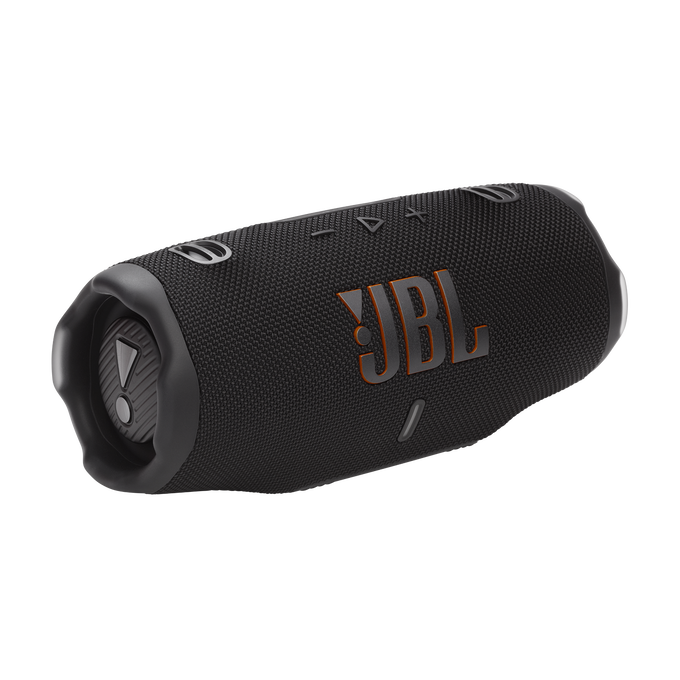

We’ve used the JBL Charge 5 in just about every environment imaginable—pool decks, forest campsites, tailgates, rooftops—and it never let us down. That’s the kind of reliability that earns trust. So when the JBL Charge 6 showed up, our expectations were sky-high. Could JBL really improve on something that already worked so well?
The short answer is yes. And not in flashy, headline-grabbing ways, but in small, thoughtful updates that collectively shift the Charge 6 into a new category of everyday versatility. A better base, a smarter handle, deeper water resistance, real EQ control—it’s the kind of speaker upgrade that doesn’t try to reinvent the wheel, it just makes sure the wheel rolls smoother.
Let’s break down where these two tanks of the Bluetooth world part ways—and where the Charge 6 earns its edge.
Built like a tank—but easier to carry
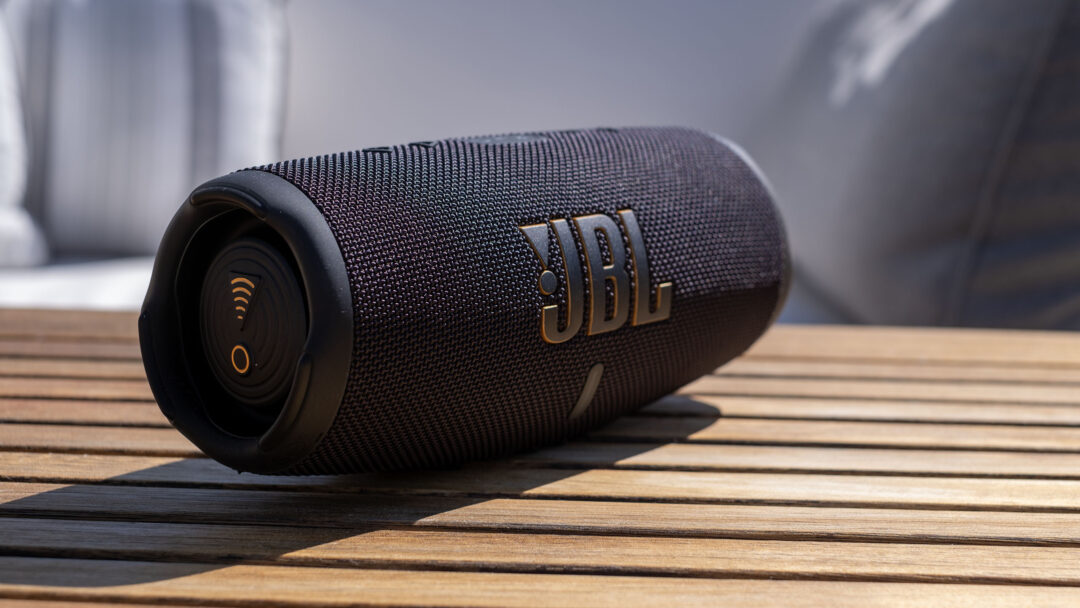
Both models still embrace that rugged, cylindrical shell with passive radiators punching out each end. You know the look: mesh-wrapped body, big JBL badge, and that unmistakable boom in a bottle vibe.
But the Charge 6 adds a detachable handle, which is a game changer when you’re trying to juggle a speaker, water bottle, and your phone on the way to the beach. It’s the kind of no-frills addition that fixes an issue you didn’t know bugged you until it wasn’t there anymore.
And the bottom redesign? Subtle, but smart. Gone are the thin silicone strips. Now you’ve got a flat, stable base that keeps the Charge 6 from rolling off uneven surfaces. It might sound like a small change, but when your speaker stays put on a sloped picnic bench, you’ll get it.
Plus, the Charge 6 now features four corner bumpers, not three, and they’re thicker too. That gives it drop protection up to a meter, even on concrete—something the Charge 5 couldn’t guarantee.
Waterproof? Yes. But now it’s deeper.
IP67 was already great—waterproof up to a meter and fully dust-tight. That’s what the Charge 5 brought to the table.
But the Charge 6? It bumps up to IP68, which means you can submerge it 1.5 meters deep for 30 minutes and still expect it to blast music afterward. That extra half meter might not seem like much, but if you’ve ever lost your speaker off a paddleboard or had it knocked into a pool, you’ll appreciate the upgrade.
Auracast replaces PartyBoost—and here’s why that matters
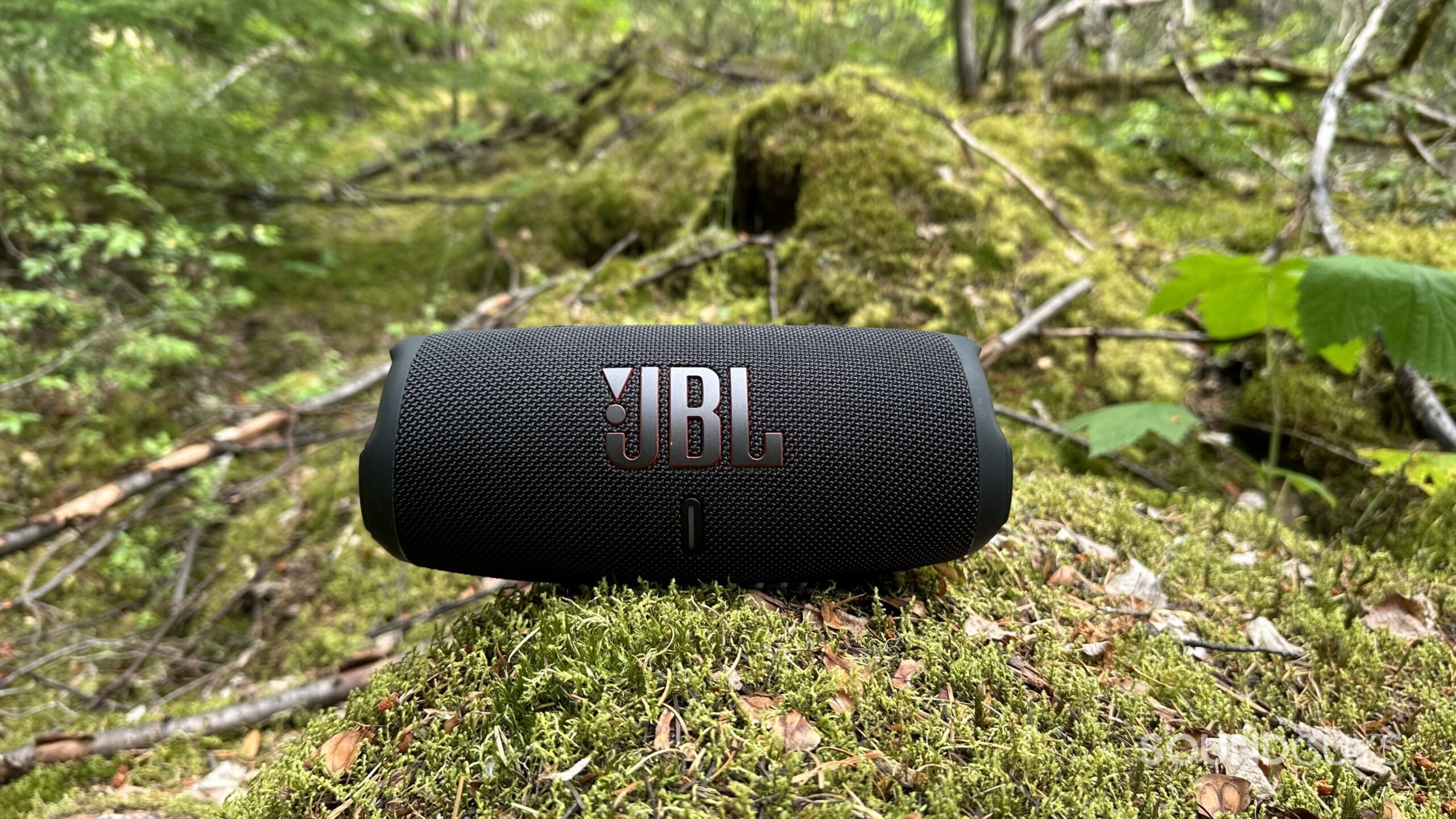
If you’ve built a setup with PartyBoost-compatible speakers (like the Charge 5, Flip 6, or Boombox 3), this one’s going to sting a bit: the Charge 6 uses Auracast instead. It’s a newer, broader Bluetooth audio standard that promises future flexibility, but it also breaks compatibility with older JBL speakers.
So yeah, if you’ve got a speaker circle built around PartyBoost, the Charge 6 won’t play nice. But if you’re starting fresh or planning ahead, Auracast is the better bet—wider potential pairing, faster connection, and support for newer JBL models like the Xtreme 4 and Clip 5.
The controls reflect this change too. The PartyBoost button is gone, replaced by the Auracast control. And now the Bluetooth, power, and link buttons are all backlit, which—finally—makes night-time playback changes possible without a flashlight.
App integration gets smarter, deeper
Here’s where Charge 6 flexes hard: EQ control.
While the Charge 5 offers a basic 3-band EQ, the Charge 6 goes full control room with a 7-band graphic equalizer. That means if you want to punch up midrange for podcasts, or pull down the sub-bass for late-night listening, you can actually do it—not just vaguely shift the tone.
There are also four built-in EQ presets on the Charge 6, so if fiddling with sliders isn’t your thing, you can just tap through profiles until one hits.
Oh, and there’s Playtime Boost. Want longer battery life? Flip this on, and the speaker trims back bass and volume to stretch playback time. Sure, it dials down the intensity, but when you’re on hour 23 of a camping trip and still want music, you’ll be glad it’s there.
Connection options level up

The Charge 5 supports Bluetooth 5.1. Stable, fast enough, and pretty reliable.
But the Charge 6 goes up a notch with Bluetooth 5.4, giving you better range, snappier pairing, and improved efficiency.
What really surprised us, though, was the addition of audio over USB-C. Yep—you can now plug your phone or laptop into the Charge 6 and get high-bitrate, lossless audio. Perfect for those moments when Bluetooth just isn’t cutting it or you want max fidelity.
Charging other devices? Still there. But while the Charge 5 has a USB-A port for output only, the Charge 6 swaps that for a single USB-C port that handles both charging and audio. It’s cleaner, more modern, and more adaptable.
Battery life? Longer, faster, smarter
The Charge 5 already impressed with 20 hours of playback.
The Charge 6 pushes it to 24 hours under standard settings—and up to 28 with Playtime Boost enabled.
That four-to-eight hour bump is huge when you’re off the grid. And if you do run low, a 10-minute quick charge gives you around 2.5 hours of extra playback. You don’t get that luxury with the Charge 5.
Audio performance: out of the box vs built to tweak
Let’s keep it real: the Charge 5 wins slightly on pure sound fidelity out of the box. It has slightly better timbre accuracy and spatial imaging, according to lab scores.
But here’s the kicker: the Charge 6 wins on customizability. With that 7-band EQ, you can tweak the audio profile dramatically. Want it punchier for a party? Crisper for audiobooks? Mellow for bedtime? Done.
And the Charge 6 handles distortion better, especially at higher volumes. So while the Charge 5 might sound a hair more “open” in stock tuning, the 6 wins over time because you can shape it to your taste.
Same form factor, but easier to live with

Both speakers are nearly the same size. Both fit in backpacks, cupholders, and beach totes. But the Charge 6 is just more pleasant to grab and go.
The handle’s a win. The base keeps it from rolling off your tailgate. And the visual tweaks—cleaner button layout, backlighting, slightly more cohesive shell design—make it look and feel more refined.
Color options? Always bold. JBL knows the outdoor crowd doesn’t want just black and gray, and both models stick to that tradition with vivid colorways.
So, which one should you go for?
If you already own a PartyBoost speaker ecosystem, and sound customization isn’t a big deal to you, the Charge 5 still holds its ground. It sounds excellent, lasts all day, and has earned its place as a rugged favorite.
But if you’re buying new—or ready to move on? The JBL Charge 6 is the more forward-thinking speaker.
Better durability. Better connectivity. Better app control. And way more flexibility in how it sounds and functions. It’s what the Charge 5 could’ve been if it were built for the way we use speakers today.
Bottom line? The Charge 5 is great. But the Charge 6 is smarter. Sharper. More complete. And once you use it, the older model starts to feel just a little less ready.