Let’s not pretend this was going to be an easy choice. When you’re talking about the ghd Air and the Parlux Alyon, you’re dealing with two of the biggest names in the pro hair dryer world. These aren’t your average pharmacy models—they’re the kind of tools that stylists swear by and clients dream of stealing after appointments. And if you’ve ever tried either, you’ll know why.
We’ve been rotating between these two for weeks—on fine hair, thick curls, damp roots, and styled bangs—and let’s just say they both deliver. But what makes this comparison fascinating is that they do it in completely different ways. They’re not competing on who’s fancier—they’re clashing on usability, power, and long-term comfort.
So if you’ve been stuck trying to choose between these two, you’re not alone. And yes, the differences are real.
Style showdown: sleek minimalism or bold attitude?

Right off the bat, you get two totally different vibes.
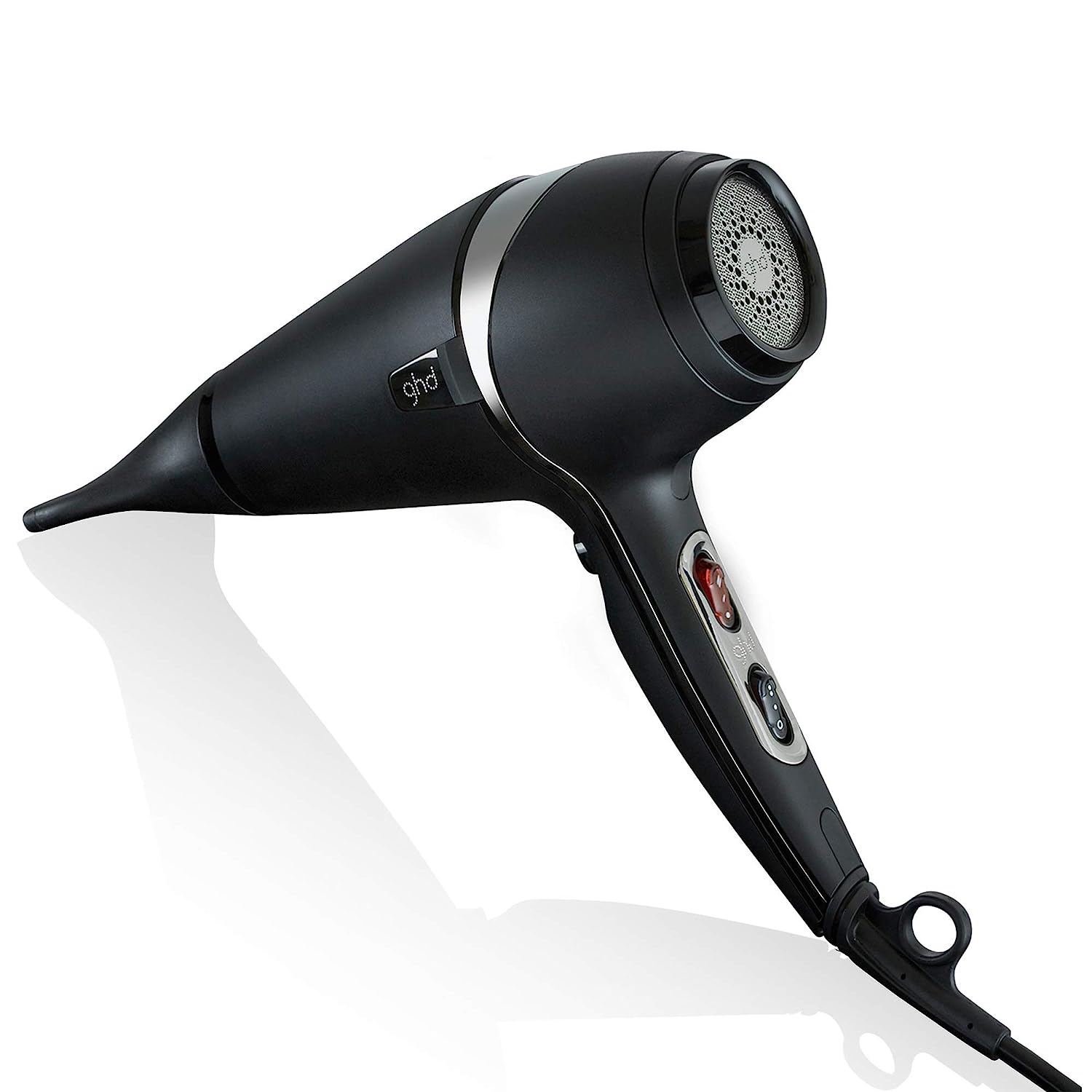
The ghd Air feels like a high-end camera: matte black, silver details, compact but solid in the hand. You feel like you’re holding something substantial. The handle is straight and thick, and while the weight isn’t a deal-breaker, it’s noticeable.
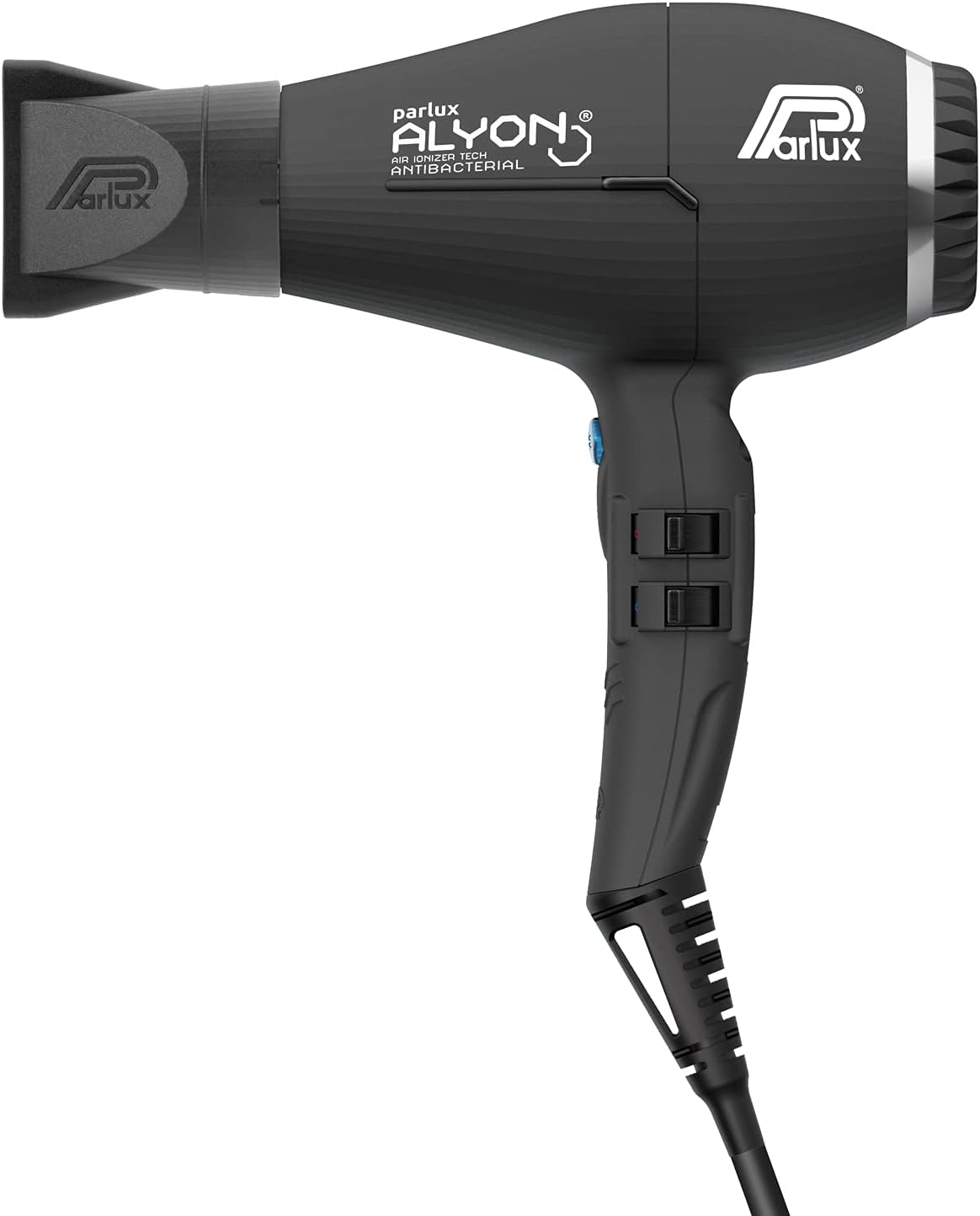
The Parlux Alyon, on the other hand, has a lighter, younger energy. It’s available in colors that go beyond the usual black-and-silver combo—jade green, turquoise, bronze… it’s like choosing an accessory, not just a tool. It’s also significantly lighter, and you feel that immediately, especially during long sessions.
Neither includes a diffuser in the box, which, let’s be honest, feels like a missed opportunity at this price point. But at least both support aftermarket options that clip in cleanly.
The Alyon’s curved handle and textured grip also make it easier to maneuver, especially if you’re holding it over your head for a while. The ghd feels more planted and stable, but it’s a bit more tiring if you’re doing precision work or rough-drying for ten minutes straight.
Ion game: no frizz, no drama
At this level, ionic technology is a given—and thankfully, both dryers deliver the goods.
The ghd Air uses its internal ion generator to smooth the hair as it dries, taming frizz and locking in moisture. The Alyon counters with its Air Ionizer-Tech system, which is just as effective in practice.
Do they feel different? Not massively. Both leave hair looking shinier, feeling softer, and with way fewer flyaways—even without products. If you’ve used lower-end dryers before, you’ll immediately notice how much less your hair swells or puffs up after using either of these.
Neither model breaks new ground in ion output, but they both hold the professional standard. If you’re chasing that glossy, “just-blown-out-at-the-salon” look, both will take you there.
Settings that give you room to work
Now here’s where things start to split a bit.
The ghd Air gives you 3 temperature settings and 3 speed settings, which gives you nine combinations total. That’s more than enough for most styling tasks.
The Alyon offers 4 temperature settings and 2 speed options—eight combos, but with finer control over heat. And trust us, that extra heat notch matters more than you think, especially if you’re working with damaged ends, high porosity strands, or trying to avoid over-drying your roots.
Both dryers include a cold shot button, and we’ve had no trouble finding or pressing it during styling. The buttons feel premium and have just the right amount of click.
The Alyon wins here if you’re someone who tweaks temperature constantly while drying. The extra granularity is subtle but appreciated. The ghd is smoother, less fiddly—but a bit more locked into presets.
Motor power and airflow: let’s talk strength
This is where the numbers come into play—and yeah, they matter.
The ghd Air is powered by a 2100W motor. That’s serious, and it definitely shows in the performance. It blows harder and faster than most consumer-level dryers.
But the Parlux Alyon edges ahead with a 2250W motor and a listed airflow of 84 cubic meters per hour. It’s intense. You feel it in the way it cuts through water, section by section, especially if you’re trying to style damp hair into shape rather than just dry it.
And even though it’s stronger, the Alyon is surprisingly quiet. Neither dryer is whisper-soft, but compared to cheaper models that scream at you while barely pushing air, both are a dream.
On thicker or longer hair, the Alyon noticeably speeds things up. The ghd is no slouch, but there’s a limit to how much bulk it can move efficiently at once.
Cord length: why does this still matter so much?
You don’t notice cord length until you do. The ghd Air comes with a decent 2.7-meter cord, which is standard for the brand.
But the Alyon gives you 3.3 meters—and it makes a difference. Whether you’re working in a salon, stretching to a wall outlet, or just trying not to knock over your coffee mug, that extra bit of reach reduces the dance around your mirror setup.
Bonus point to the Alyon for its built-in cable support system, which keeps the cord from twisting and fraying where it meets the base. The ghd doesn’t have that, and while it’s not a huge issue out of the box, it can become one over time.
Maintenance: small filters, big deal
No one talks about filters until their dryer chokes on lint. The ghd Air’s back grille is removable for cleaning, and the design is easy enough to open and wipe down.
But the Alyon has something clever: the HFS (Hair Free System). It’s a trap mechanism that catches loose hairs before they wrap around the motor. If you’ve ever tried to tweeze hair out of a fan vent with a toothpick, you’ll get why this is such a big deal.
Especially in salon environments, where hair is constantly flying around, the HFS is genius. Even at home, it keeps performance consistent and cleaning sessions less gross.
Voltage and travel: one goes global
If you’re planning to travel, this might be a dealbreaker.
The ghd Air supports universal voltage, so as long as you bring the right plug adapter, you’re good to go.
The Alyon does not. It’s wired for European voltage, so you’ll need a proper voltage converter if you’re using it elsewhere. For stylists who work internationally or anyone who’s often in the air, the ghd becomes the safer option.
Accessories and usability touches
You don’t get much in the box with either dryer—no diffusers, no fancy attachments—but both work well with add-ons.
The ghd Air’s nozzle is a bit narrower, giving you more control when focusing airflow on small sections. The Alyon’s wider nozzle spreads heat and air more evenly, which works well for rough-drying or blowing out large areas quickly.
Handles on both are ergonomic, and the buttons are well-placed. No awkward thumb contortions or accidental presses. But once again, the Alyon’s lighter weight gives it an edge for long blowout sessions. Your wrist will thank you.
Build quality and durability: salon-approved, both ways
These are pro-grade dryers, so it’s no surprise that both are made in Italy and feel like tools, not toys.
The ghd Air has a dense, heat-resistant casing that’s survived years of knocks in our kit. It doesn’t scuff easily, and it holds its balance well over time.
The Alyon uses Parlux’s anti-heating plastic, which stays cool to the touch—even when you’re going full blast. The motor is rated for over 3000 hours, and based on how it’s performed for us so far, it’s built to last.
It’s hard to separate them here. Both are made to handle daily abuse, heat cycles, and long work hours.
So… who takes the crown?
We didn’t expect this comparison to be so tight. But once you look at the details, the Parlux Alyon quietly but confidently takes the win.
It’s lighter, stronger, more customizable in temperature, and built with smart features like the HFS and longer cable. The airflow is faster, the ergonomics are better, and for anyone who styles frequently or professionally, it just works a little harder without wearing you out.
That said, we still love the ghd Air. It’s solid, sleek, and universally compatible for travel. It’s probably the better choice for occasional stylists or those loyal to the ghd ecosystem. But for daily performance and next-level usability?
The Alyon walks away with it—quietly, confidently, and with way better color options.