


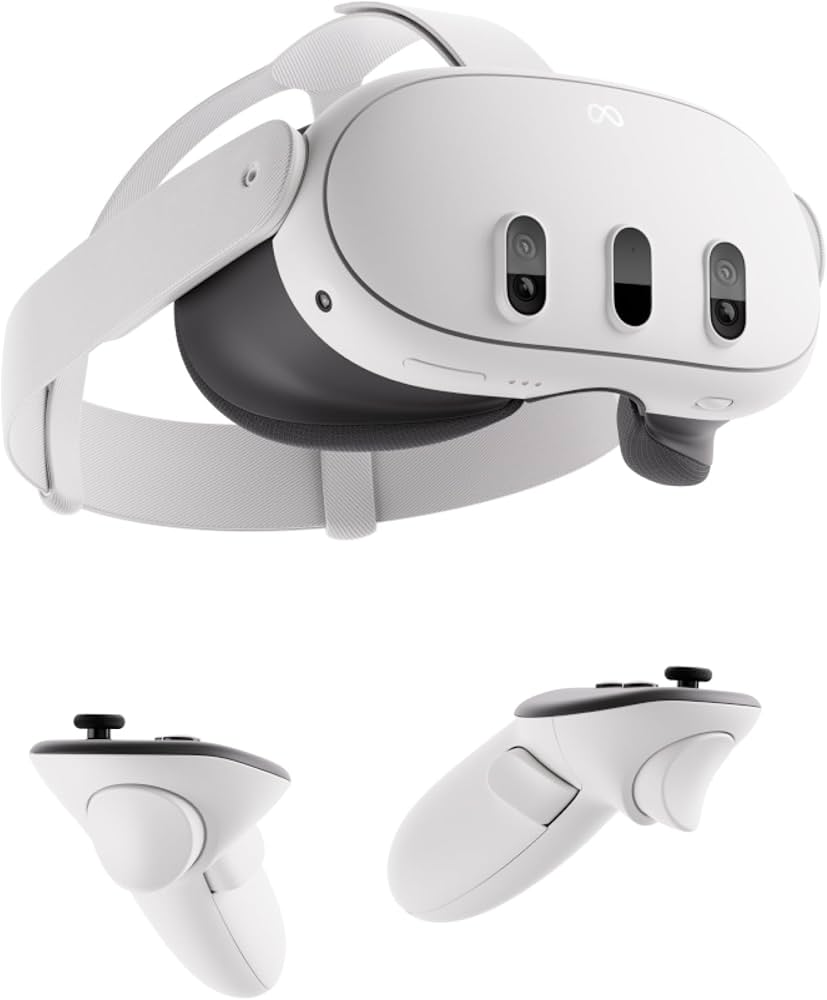

You know that frustration when you’re dying to escape into a VR session, everything’s charged, you’ve cleared your space, maybe even dimmed the lights… but then comes the decision: which headset should you trust to not kill the mood? That’s the moment we’ve all been in. And right now, two headsets are grabbing at our wrists like overenthusiastic tour guides to the virtual future—the Pico 4 Ultra and the Meta Quest 3. One’s clearly packing more RAM and a few ambitious tricks; the other walks in with a catalog so deep you could swim in it for weeks and never hit the bottom.
What’s wild is how close these two feel when you’re actually using them. On paper, the differences look big. In real life? It’s not always what you’d expect. So let’s get our hands dirty and break this down. We’ve spent hours in both of these headsets, and we’ve got thoughts.
Specs and performance: who’s really pushing pixels?

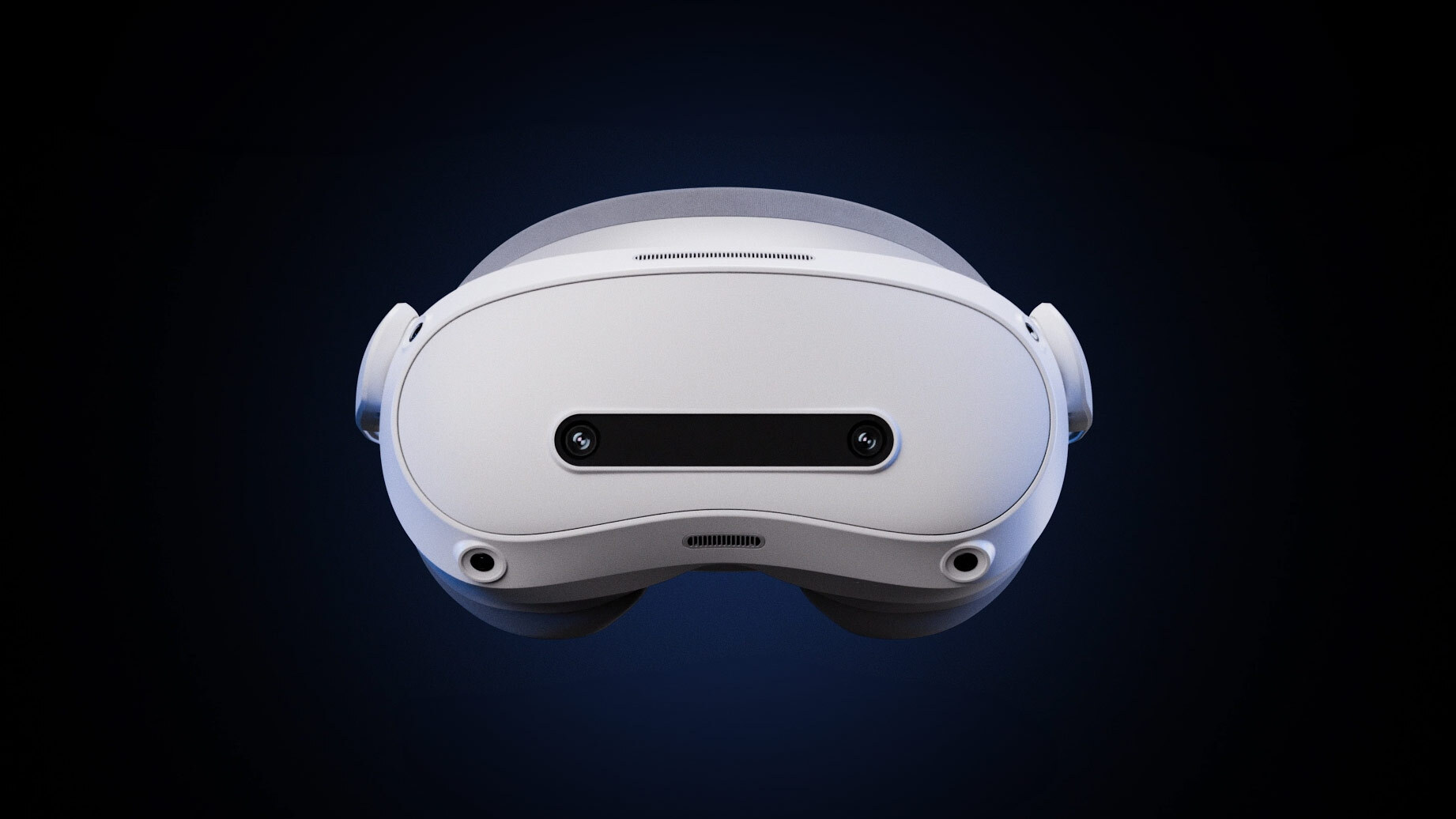
You could write a love letter to Pico’s 12GB of RAM—and honestly, we’ve thought about it. It’s not just that it’s more than the 8GB in the Meta Quest 3, it’s that it feels ambitious. It wants to flex. The same goes for its 2,160 x 2,160 LCD screens per eye, which on paper sound like a dream. And they do look good. Crisp, sharp, plenty of detail.
But here’s the thing: both headsets run on the same Snapdragon XR2 Gen 2 processor, and in practice, that levels the playing field in a big way. Meta’s variable refresh rate of up to 120Hz, depending on the app, makes some experiences smoother in a way that’s immediately noticeable. Even with slightly lower resolution, the Quest 3 can feel snappier and more responsive.
And then there’s multitasking. Pico lets you open up to eight windows at once in its multitasking view, which is cool—but who’s actually doing that on a headset? Meta caps it at six, but we’ve barely ever maxed that out anyway. Storage-wise, Pico gives you 512GB compared to Meta’s 128GB base, and yeah, that’s a lot more space, but you don’t need it unless you’re hoarding games like it’s 2020.
In terms of raw numbers, Pico wins, but in day-to-day performance, it’s honestly more of a tie than you’d think.
Mixed reality: sharpness vs. stability
Okay, passthrough is weird. It’s one of those features that sounds mind-blowing, and then you use it, and half the time you’re like… wait, what am I supposed to do with this?
Still, it’s improving. Pico’s passthrough is undeniably more colorful, with environments that feel more vivid and alive. When the lighting’s right, the view through its cameras almost looks natural. But only almost. There’s visible warping at the edges, and sometimes that weird ripple effect you get when turning your head too fast.
Meta’s passthrough is a bit more muted, a bit grainier. But it’s also more stable and less distracting. It feels more “there,” even if it’s not as pretty. And the longer you use it, especially for actual gameplay in mixed reality, the more you start to appreciate that calm steadiness over color vibrancy.
Pico’s edge is there, technically speaking, but it’s not transformative. Not yet. You see the potential—but it’s just that. Potential.
Software: Meta turns the key and opens the floodgates
This part? No contest.
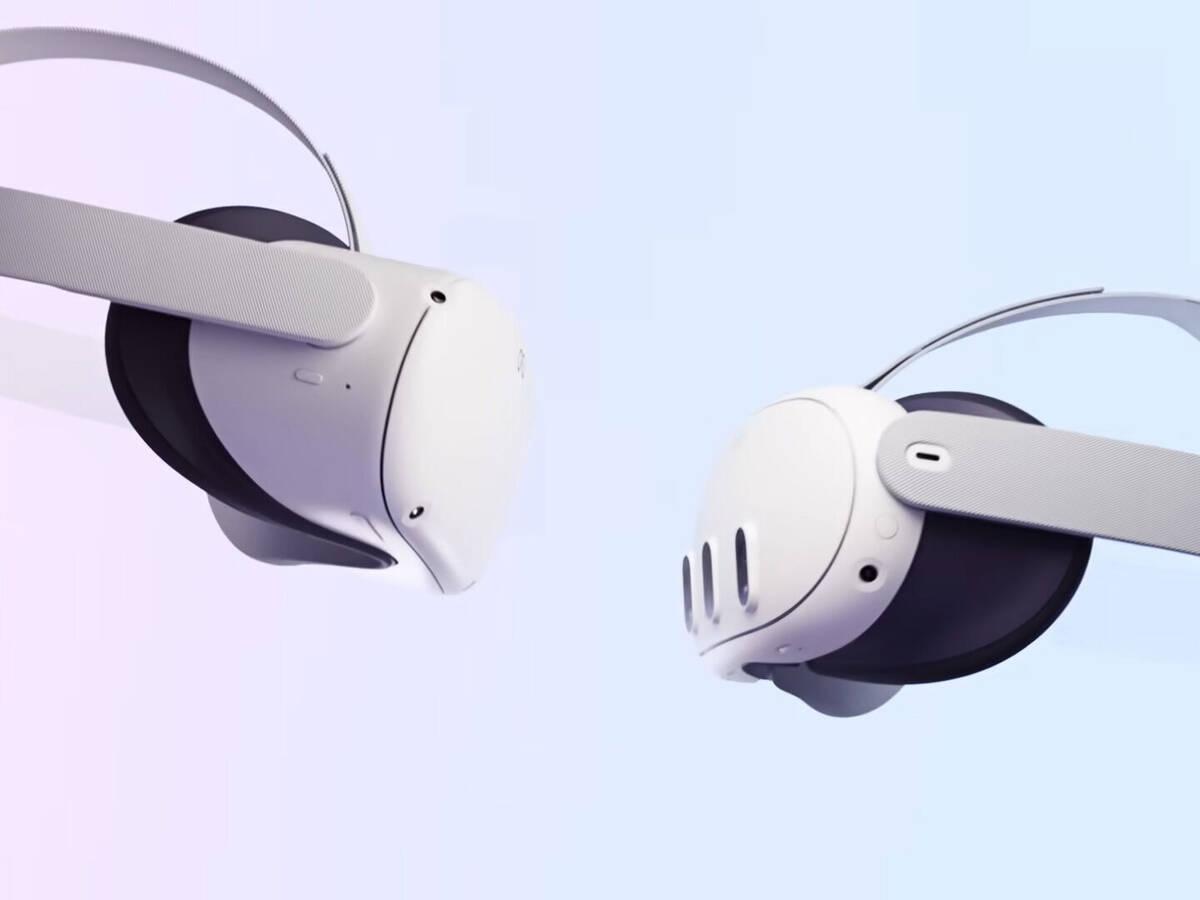
Meta is running away with the software experience, and not just because of its huge app library. We’re talking exclusive titles like Asgard’s Wrath 2 and Assassin’s Creed Nexus, games you literally can’t find anywhere else. Resident Evil 4 VR? Beat Saber? They’re not just games—they’re staples. Add to that Xbox Cloud Gaming integration, and suddenly, the Quest 3 doesn’t just feel like a VR headset—it feels like a console, a fitness device, a cinema, a multiplayer hub… all of it.
Pico 4 Ultra is trying. It’s come a long way, and its app store now carries most of the cross-platform essentials. But when the next big VR game drops and it’s Meta-exclusive, Pico users are left outside looking in. There’s no other way to put it.
The interface on Pico is clean, and its software is surprisingly polished, but it still feels like you’re in someone’s beta test compared to Meta’s theme park.
Meta wins this round by a landslide, and it’s not because of marketing—it’s because of content.
Features: Pico swings for the fences
Now here’s where things get interesting again.
The Pico 4 Ultra brings real innovation to the table, starting with its Motion Trackers for full-body tracking. You strap them to your feet, and suddenly you’re not just flailing your arms—you’re dancing, squatting, kicking. It’s silly. It’s amazing. And it changes the way some rhythm and fitness games feel, full stop.
Then there’s the spatial capture camera, which lets you shoot 3D photos and videos. It sounds cooler than it is. The quality is middling at best, and honestly, taking pictures while wearing a headset is just… awkward. But hey, Pico tried something no one else did, and that counts for something.
Meanwhile, Meta keeps it conservative. Its hand tracking is tight, reliable, and surprisingly accurate, and the controller performance is buttery smooth. But beyond that, there’s nothing flashy here. It’s more of a “if it ain’t broke…” situation.
Pico clearly wins for innovation, even if not all its experiments land. At least it’s trying to push the envelope.
Design and comfort: not all grams are equal

Comfort’s personal, but let’s break it down.
Meta Quest 3 weighs 515 grams. The Pico 4 Ultra hits 580 grams. That 65-gram difference might not sound like much, but wear it for an hour straight and your neck will absolutely have an opinion.
Both headsets use similar strap systems, and neither ships with a deluxe facial interface, which is just annoying. The standard foam padding works, but it doesn’t feel premium, and light leakage can be a pain if your face doesn’t match their ideal shape.
Still, with the right strap mods, both headsets can be worn for decent-length sessions without too much discomfort. It’s not like either of them is torture to wear—but they’re not invisible on your face either.
Meta feels slightly better balanced. Just a little more centered, less front-heavy. And when you’re waving your head around dodging digital arrows, that matters.
Tracking and controllers: Pico levels up
When it comes to tracking, both headsets nail the basics. Inside-out tracking is fast and accurate. Controllers feel snappy, with minimal lag. There’s honestly not much to complain about on either side.
But once again, Pico’s Motion Trackers shift the conversation. Suddenly, VR becomes full-body. Games that support it feel fresh again. You start thinking with your feet, not just your hands.
Meta doesn’t have an answer for this. Its controller experience is great, yes, but it’s very traditional. Pico’s optional sensors unlock a layer of immersion that feels like a sneak peek at where VR could go next.
It’s not for everyone, but if you care about immersion? This is one of the few real differences that might actually change how you play.
Ecosystem and updates: who keeps evolving?
This is where Meta’s long game pays off.
HorizonOS gets updated all the time, and those updates matter. We’re talking smarter room mapping, better performance, feature improvements—stuff that makes the headset feel new again every couple of months.
Pico OS has improved a lot, and they’ve cleaned up the interface to the point where it’s pleasant to use. But updates are less frequent, and sometimes they feel… well, a little thin. Like small tweaks rather than real improvements.
And then there’s community and support. Meta has forums, dev networks, user tutorials—it’s an ecosystem that feeds itself. Pico isn’t quite there. Not yet.
If you’re betting on future-proofing, Meta still feels like the safer bet.
Conclusion: Meta wins, but Pico’s making it interesting
This isn’t one of those easy calls. We wanted Pico to win. We love underdogs, and the 4 Ultra came in swinging with specs, innovation, and some truly cool ideas. The foot tracking alone opens up gameplay possibilities that Meta hasn’t even touched.
But at the end of the day, the Meta Quest 3 just feels more complete. Its software catalog is on another level, and the consistent updates make you feel like your investment is being protected. It might not have all the fun tricks, but what it does, it does well—and often better.
Honestly? If you’re a VR veteran looking to try something different, Pico’s worth a look just for the novelty factor. But if you’re buying one headset and want to know it’ll keep up for years to come, the Meta Quest 3 still holds the crown.
Or at least… until someone throws a better punch.