



There’s that moment—we all know it—when the laundry chair collapses under its own weight and you realize: it’s ironing day. And no, you can’t put it off any longer. But here’s a small miracle: a good steam ironing system doesn’t just make the job faster, it makes it tolerable. Almost satisfying, even. Almost.
But how do you pick the right one? That’s where things get messy. On paper, the Rowenta Powersteam VR8315, the Polti Vaporella 535 Eco Pro, and the Philips PerfectCare Compact look pretty similar. All promise fast heat, deep steam, and smoother shirts. But dig a little deeper and each tells a different story. We’ve pressed our way through every detail—literally—and we’re here to help you figure out which one is actually worth plugging in.
Different builds, different vibes
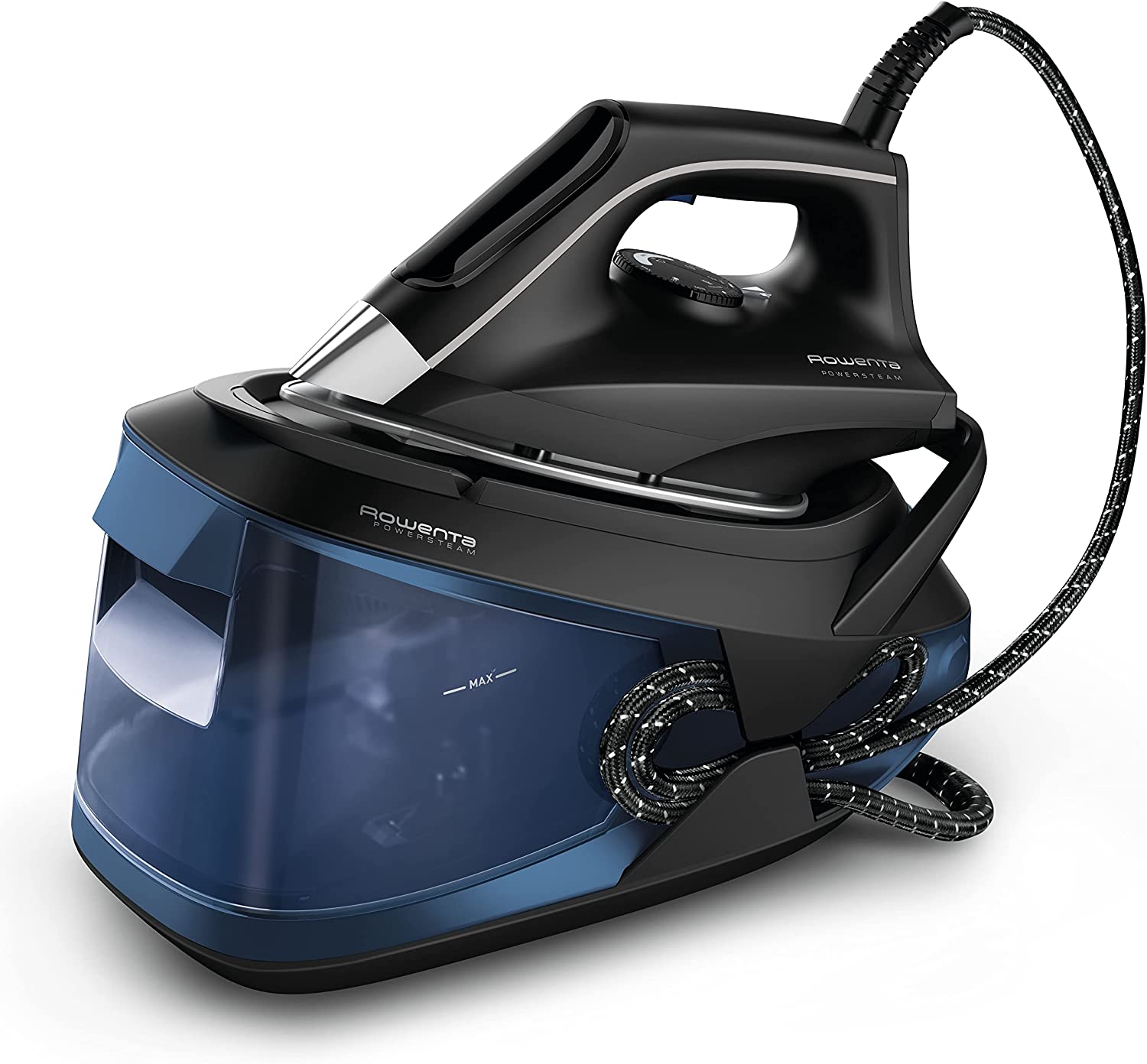
The shape and feel of a steam ironing system might seem like a background detail—until you’re trying to store it or drag it around the ironing board. Rowenta keeps things sharp and angular, with a compact squared base that hides a surprisingly generous tank. The iron itself feels solid in the hand, and the pointed soleplate tip gives it precision where it counts—along buttons, collars, and pleats.
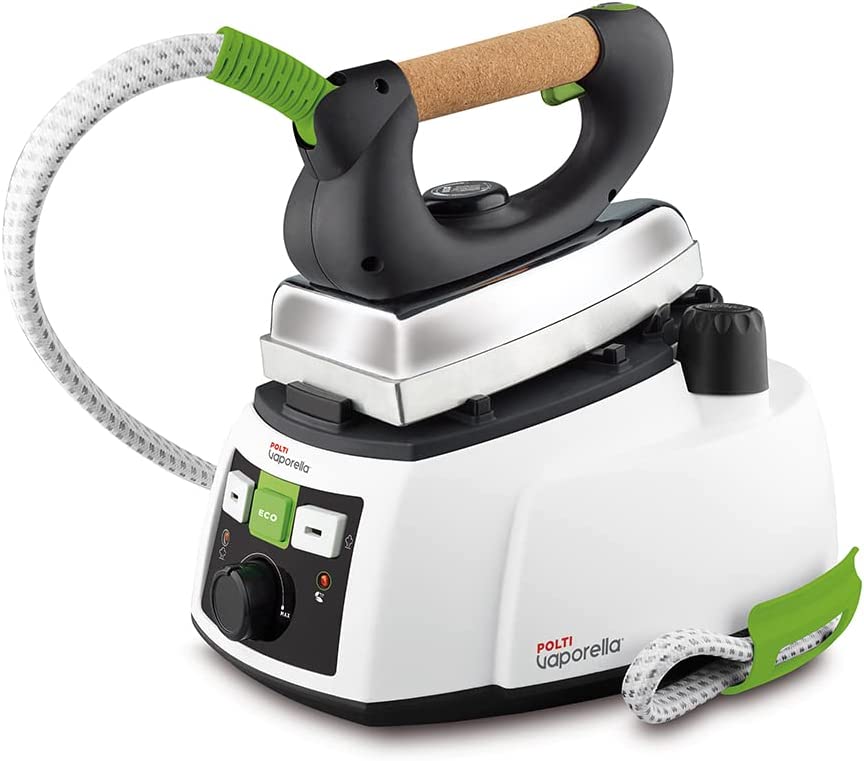
Polti, meanwhile, is all about nostalgia. The cork handle gives off serious retro vibes, but it’s not just about looks. That cork stays cool and adds grip, especially when you’re tackling a mountain of linens. The base is rounder and chunkier, with a bit more presence than the others.
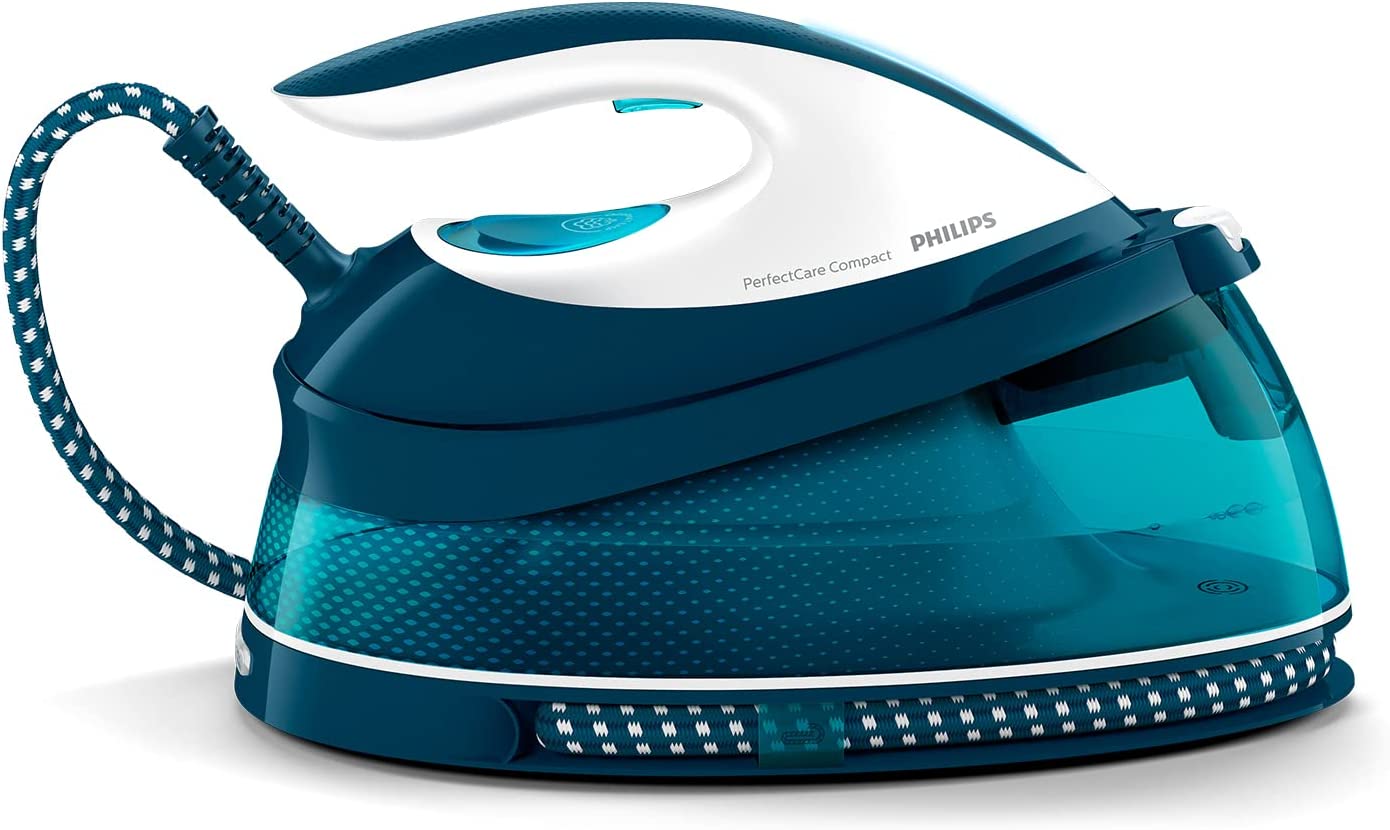
Then there’s Philips. All smooth lines and curves, with a softer design that doesn’t scream “appliance.” Among the three, it’s easily the most contemporary in appearance. And it’s not just pretty—its compact build makes it easier to stash or slide along the ironing board.
Watts and bars: where the power starts showing
Steam ironing is all about heat and pressure—no way around it. And the numbers here paint a clear picture. Rowenta and Philips both clock in at 2400 watts, giving them a serious leg up in heating speed and consistent output. You’ll feel that power when you start gliding through thick fabric without multiple passes.
Polti runs at a more modest 1750 watts. It’s not a disaster, but it’s noticeable. If you’ve got mixed fabrics or long sessions ahead, that power gap makes a difference.
Pressure-wise, Philips leads with 6.5 bars, followed closely by Rowenta at 6.2. That extra steam pressure gives them punch—especially on denim, upholstery, or stiff linen. Polti stays behind at 4 bars, which is fine for everyday cottons but starts to struggle on tougher material.
Steam: the more, the better—especially when it’s stubborn
Here’s where you start feeling the gap. Polti offers a steady 90 g/min of continuous steam, which gets the job done for basic tasks. But when you hit a shirt that’s been crumpled under a laundry basket for a week? You’ll wish for more.
Rowenta and Philips both deliver 120 g/min continuously—so smoother, faster ironing becomes your new normal. And when you need an extra kick? Rowenta throws out a 340 g/min steam boost, while Philips goes full blast at 400 g/min. That’s the kind of firepower you want for vertical ironing or thick stacks of folded shirts.
Polti skips the burst altogether. If you’re someone who likes that instant “whoosh” of power to smooth out a sleeve in one go, this absence might start to feel like a missing gear.
One setting for all? Only one brand dares
Only Philips uses automatic temperature regulation with its OptimalTEMP system. No more fiddling with dials or wondering if your silk blouse is about to become a science experiment. You just iron. The system does the thinking.
Rowenta and Polti keep it classic with manual controls. That’s not a dealbreaker, but it does mean extra time—and extra caution—when switching between fabrics. If you’re multitasking or distracted (which, let’s be honest, happens), that small simplicity from Philips is a quiet blessing.
Bigger tanks, fewer refills
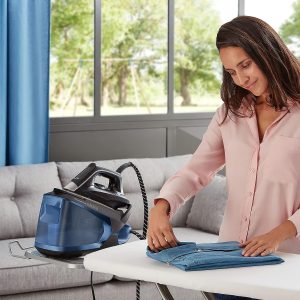
Nobody enjoys pausing mid-flow to refill the water tank. Rowenta steps up with a 1.7-litre tank, Philips right behind with 1.5 litres. That’s roughly 90 minutes of ironing—enough to flatten an entire week’s wardrobe.
Polti’s 900 ml tank is clearly smaller. It’ll give you about 60 minutes on Eco, but in full steam mode, it runs out faster. It’s fine for shorter sessions but starts feeling limited for bigger laundry loads.
Still, all three models have visible water levels and refill-friendly tanks, so at least you’re not dealing with drips or awkward angles when topping up.
Soleplate secrets: who slides the best?
Polti uses a traditional aluminium soleplate. It heats fast and holds up over time, but it doesn’t have the smoothest glide. On synthetics or lighter fabrics, you’ll occasionally feel a bit of drag.
Rowenta’s Microsteam 400 soleplate is stainless steel with a laser-treated finish. That means excellent durability and slick movement across all fabrics. Plus, 400 micro-perforations mean steam spreads evenly from edge to edge.
Philips goes for its SteamGlide Plus soleplate, combining titanium oxide and six protective layers. The glide is smooth—no question. But without central perforations, steam distribution isn’t quite as uniform as Rowenta’s. It’s a small detail, but one you notice when working on wide surfaces or multiple layers.
Eco mode and safety: power without paranoia
All three irons include an Eco setting. This mode cuts steam slightly but can lower power consumption by around 25–30%. Perfect for when you’re just doing a quick refresh and don’t need max output.
On the safety front, Rowenta and Philips both offer auto shut-off. You walk away, get distracted, forget… the iron powers down by itself. Polti skips this feature, which feels like a strange omission in 2025. If your house has kids, pets, or just regular chaos, it’s something to think about.
Scaling the problem: anti-calc matters more than you think
Nobody wants to deal with limescale messing up steam flow. Thankfully, all three systems come with anti-calc protection. Rowenta and Philips include integrated systems—rinse them occasionally, and you’re good. Polti also includes a scale management system, though you’ll want to be a bit more regular with upkeep.
No descalers or special products required for any model. Just simple, routine care that doesn’t take more than a few minutes a month.
Accessories and ease of use: keeping it simple
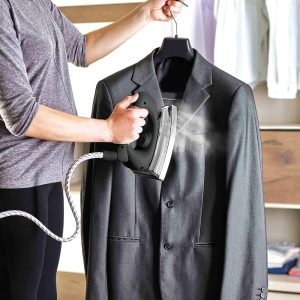
No bells and whistles here. Each system includes the basics: a solid base, a flexible hose, and a secure iron. All three heat up quickly—Rowenta and Polti take about two minutes, while Philips shaves off a few seconds.
There are no drawers or fancy extras, but Philips stands out for being easier to move around and store. Its frame is lighter, its design more compact, and when the ironing board is already cluttered, that matters more than you’d expect.
Vertical steaming: not all power is created equal
All three models let you steam vertically. Curtains, jackets, hanging shirts—they’re fair game. But the real difference is how effective that vertical steam is.
With its higher pressure and 400 g/min steam burst, Philips handles vertical ironing with ease. It powers through wrinkles like they’re not even there. Rowenta’s not far behind with 6.2 bars and 340 g/min. You can refresh clothes directly on hangers without repositioning or waiting.
Polti does vertical steaming, sure. But with just 4 bars and no burst, it’s slower. You’ll need to get closer to the fabric and go over the same area a few times to get the result.
And when the steam settles?
We didn’t expect it, but we kept reaching for the Rowenta Powersteam VR8315. It just hits the right balance—strong pressure, solid steam output, large tank, great glide, and peace-of-mind safety features. You plug it in, and it gets to work. No surprises, no quirks.
Philips PerfectCare Compact came incredibly close. That automatic temperature system is a game-changer if you hate fiddling with settings. Its design is clean, the burst is stronger, and it’s incredibly intuitive. But the soleplate’s steam distribution and slightly shorter autonomy knocked it down a notch for us.
Polti Vaporella 535 Eco Pro? It’s charming. Sturdy. That cork handle is a pleasure. But with lower power, no burst, and a missing shut-off, it feels better suited for smaller loads or casual users than full-steam warriors.
If you’re looking for something that can genuinely make ironing faster, smoother, and less annoying—Rowenta takes the crown. It doesn’t make you love ironing, but it makes it way easier to get through. And sometimes, that’s all we’re asking for.