



Let’s be honest—instant coffee isn’t cutting it anymore. We want the crema, the body, the aroma… and we want it in our pajamas. That’s where automatic coffee machines step in, turning average mornings into something a little more ritualistic. But here’s the catch: when three heavy-hitters like De’Longhi Dinamica+, Philips Serie 5400, and Siemens EQ.500 are all promising that barista-level experience at home, how do you choose?
We’ve lived with all three. We’ve spilled milk, pulled back-to-back espressos, pushed every button, and yes—we’ve stood there just watching them brew like it’s a Netflix show. The differences? Some are subtle. Some, not so much. But they add up. So here’s everything you need to know before committing to one of these countertop beasts.
Pressure makes the shot—and here, not all bars are equal
This is the part that espresso lovers won’t ignore. The De’Longhi Dinamica+ delivers a full 19 bars of pressure, giving it a small but important edge when it comes to crema and consistency. That extra force pushes more flavor out of the grounds—especially noticeable with darker roasts or more complex blends.
Both the Philips Serie 5400 and Siemens EQ.500 settle at 15 bars, which is technically more than enough. But if you’ve got a picky palate or you’re chasing that exact café texture, you’ll feel the difference over time. Power-wise, all three machines are in the 1450–1500-watt range, so they heat fast and stay stable, which keeps your shots balanced.
So yes, De’Longhi has the muscle. And it shows up in the cup.
Milk systems: the froth war you didn’t know you cared about
Now let’s get foamy. Because if you’re not just pulling espressos, the milk system is where things get personal.
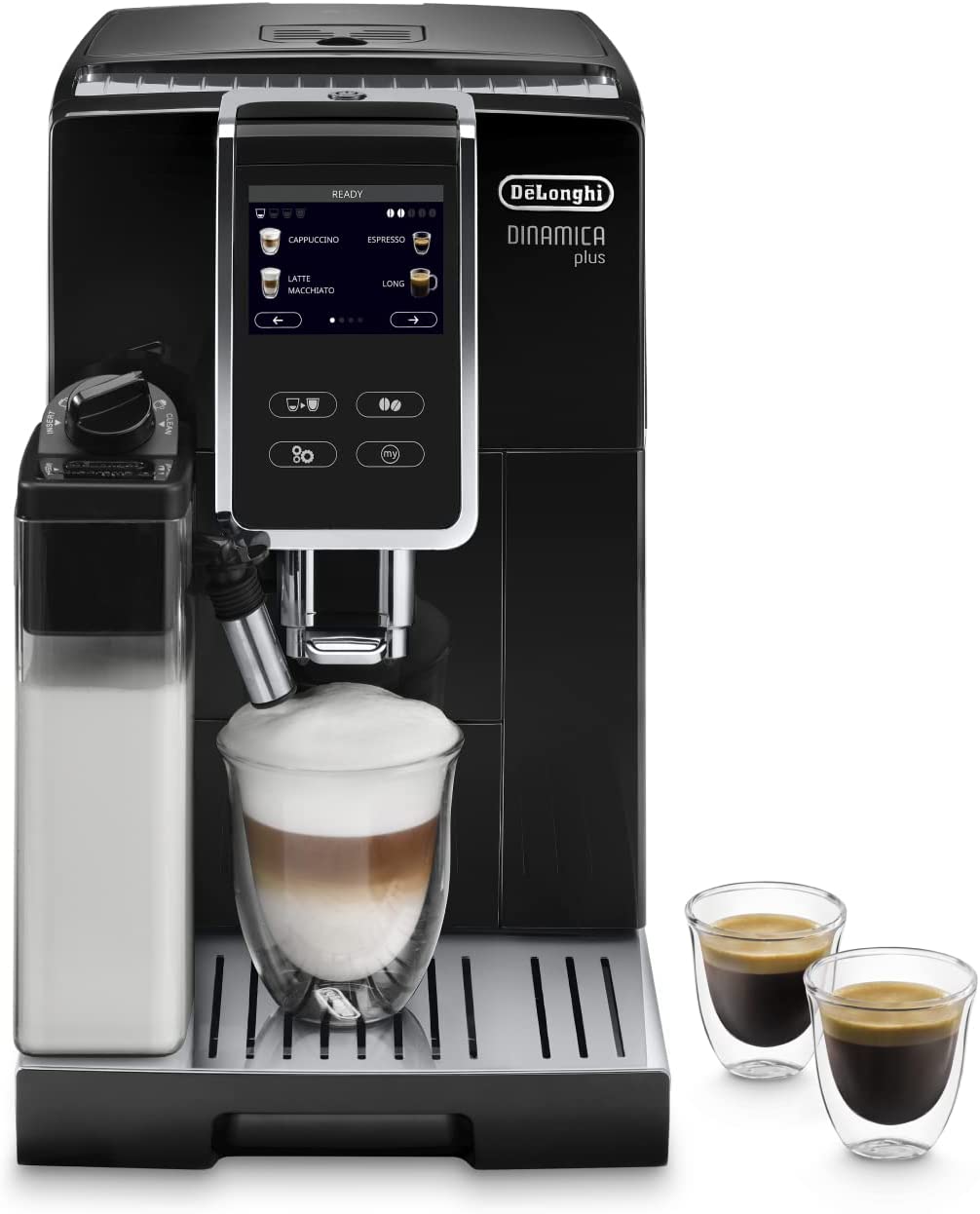
De’Longhi uses the LatteCrema system, which consistently delivers that thick, creamy froth you could spoon like dessert. It’s dense, it holds shape, and it makes cappuccinos feel indulgent. But it’s also slightly more involved to clean.
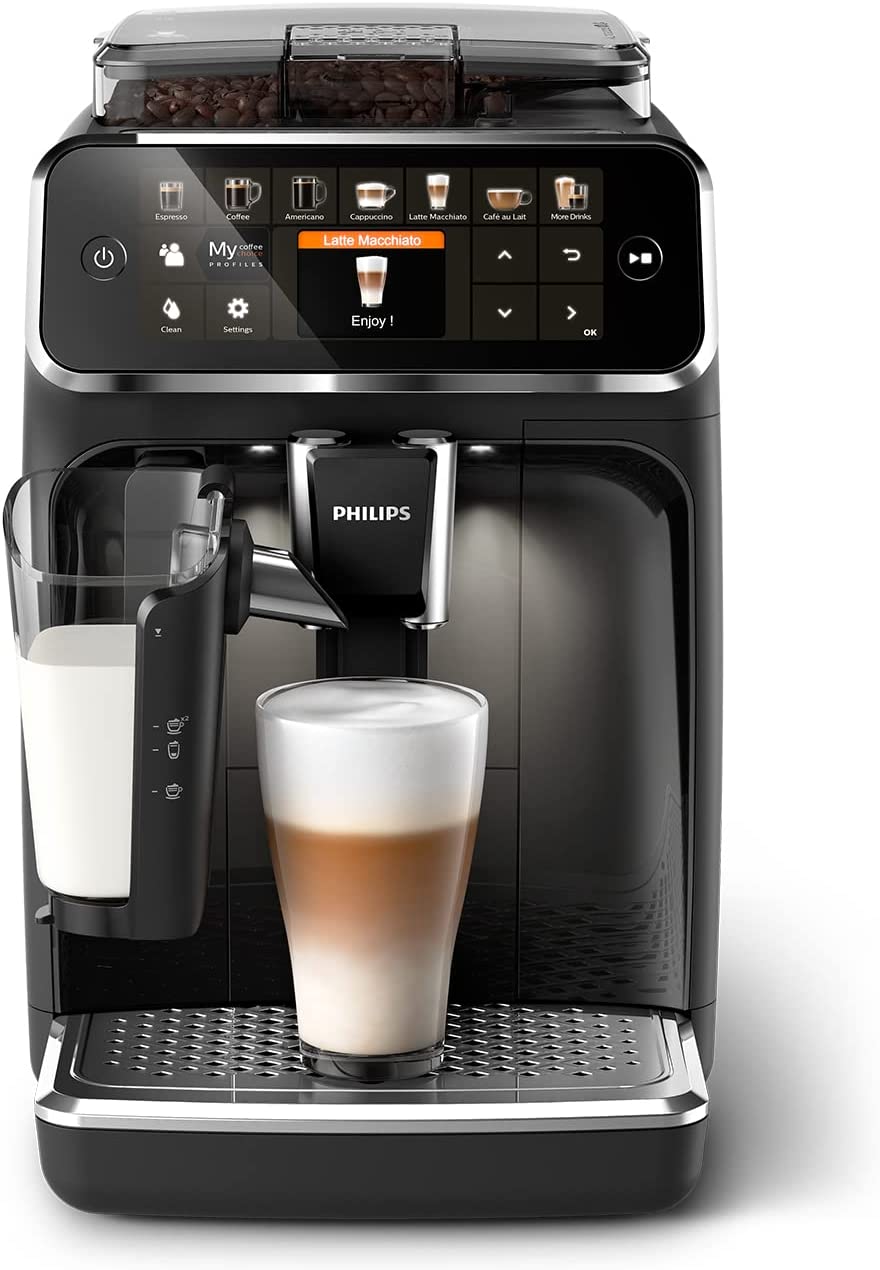
Philips fights back with the LatteGo system, and it’s genius in its simplicity. Only two parts, no tubes, and everything dishwasher-safe—cleaning this thing feels like a reward, not a chore. The foam is smooth and balanced, even if it doesn’t match the De’Longhi’s texture every single time.
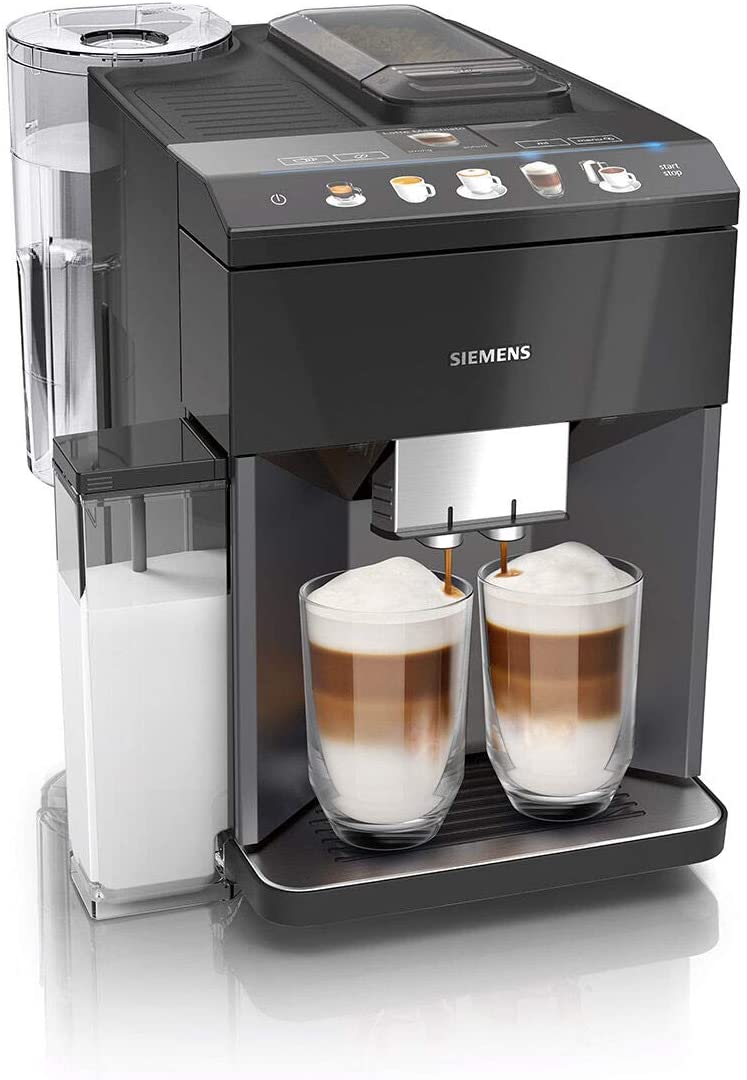
And then we get to Siemens, with its autoMilk system. Solid performance, consistent temperature, and good texture—but here’s the kicker: it’s the only one that can make two milk-based drinks at once. Double cappuccino? Done. No waiting, no manual repeat. That’s a big plus in couples’ kitchens or morning rushes.
So if cleaning is your thing, go Philips. If you want precision foam, think De’Longhi. And if you hate taking turns, Siemens wins that round.
Water, beans, and how often you’re refilling

You wouldn’t think a 100ml difference in water tank size matters… until you’re halfway through Sunday brunch with guests.
De’Longhi and Philips both have 1.8L water tanks, and De’Longhi sneaks ahead with a 300g bean hopper—the biggest of the bunch. Philips follows with 275g, and Siemens trails at 270g, plus a slightly smaller 1.7L water tank.
Day to day? These aren’t dealbreakers. But in a busy household or office, you’ll notice the slightly larger capacity of De’Longhi over time. And yes, all three have a slot for pre-ground coffee, so decaf lovers can join the party.
Grinding control: one brand lets you play barista more than the others
Grinding might be the most underrated feature of these machines. If your beans are top notch, you want full control over how they’re ground.
De’Longhi offers 13 grind settings, which means you can dial in the flavor just right—lighter roasts, finer grind; fuller body, coarser setting. Philips offers 12 ceramic settings, close enough to satisfy most, while Siemens only gives you three fixed options.
That’s… fine for espresso-only households, but if you want to experiment, Siemens might feel limiting. Especially if you like switching between bean types or roasts. Also worth noting: De’Longhi uses a steel conical grinder, fast and precise, while Philips and Siemens go for ceramic, which runs cooler and lasts long. But in daily use, the wider adjustment range of De’Longhi puts it ahead.
Drink variety and customization: more profiles, more control
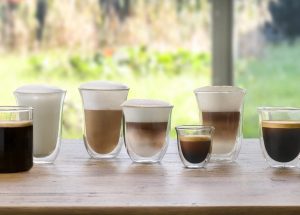
This is where things get spicy. Because once you’ve got your favorite drink nailed down, you want it again. And again. Exactly the same.
De’Longhi and Philips both offer 12 drink presets, covering everything from espresso to latte macchiato and even Americano. Siemens stops at 9, and while that covers the basics, it’s not quite the same spread.
Philips takes a smart step forward with multiple user profiles, so you and your partner don’t have to keep reprogramming your preferences. That’s especially great in shared homes, where everyone wants “their coffee” a certain way.
Still, De’Longhi’s large 3.5-inch touchscreen and super responsive interface make the whole process smoother. You can adjust coffee strength, milk quantity, temperature, and volume right there. It feels quicker, more intuitive, even if it doesn’t store multiple profiles like Philips.
If you’re a household of one or two, De’Longhi’s layout wins. If everyone wants their own button, Philips makes that happen.
Cleaning up: easy, easier, and ultra easy
No one wants to spend 20 minutes scrubbing a milk frother before work. Thankfully, all three machines make maintenance pretty painless.
All of them have auto-cleaning cycles, removable drip trays, and detachable milk containers. But the real MVP here is Philips’ LatteGo, which literally clicks apart into two pieces and rinses clean in seconds. No tubes, no fiddling, no buildup.
De’Longhi and Siemens use more traditional carafes, which offer finer foam but occasionally require deep cleaning. Not hard, but more steps. If cleaning laziness is your default (no judgment), Philips wins by a mile.
Using the machine: screens, menus, and tech vibes
Touchscreen fatigue is real—but not here. All three models use bright TFT screens, and thankfully, they’ve ditched the cluttered button approach of older generations.
De’Longhi leads again with its big 3.5-inch display, where every drink is clearly labeled and settings are easy to tweak. Philips follows with a slightly smaller screen, still colorful and logical, and Siemens feels the most minimalist, which some will love, others might find less flexible.
None of them are app-connected, which is weirdly refreshing. You don’t need your phone to make a coffee. Just tap and go.
So if you value a fast, fluid menu? Go De’Longhi. If you want profiles and personalization? Philips. If you like that no-frills, Bauhaus vibe? Siemens.
A quick vibe-check: who’s best at what?
Let’s zoom out for a second and call it like it is.
-
De’Longhi Dinamica+ is the machine for the control freaks (in the best way possible). High pressure, tons of grind settings, dense foam, and a screen that makes it all feel smooth.
-
Philips Serie 5400 is the practical genius. So easy to clean, generous with drink options, and the user profiles make it perfect for households where everyone’s picky.
-
Siemens EQ.500 is the efficient multitasker. Doesn’t go overboard on options but nails the essentials—and preparing two milk drinks at once is a killer feature for busy couples or small offices.
Final shot: De’Longhi walks away with the gold
Here’s the thing. We tried to find reasons not to love the De’Longhi Dinamica+, just to keep it fair. But the more we used it, the clearer it got: it’s the most complete experience.
From its 19-bar pressure to the granular control of its grinder, to that rich LatteCrema foam and buttery-smooth touchscreen, it just hits all the right notes. It feels made for people who don’t just drink coffee—they live it.
Philips gets major points for ease and family-friendliness, and Siemens wins on milk efficiency, but when you’re looking for that cup that makes you go “yep, this is why I got this machine,” De’Longhi delivers, day after day.
Unless you’re doubling up on milk drinks every morning or need multiple profiles, this one’s your best bet for barista vibes without leaving the house.