


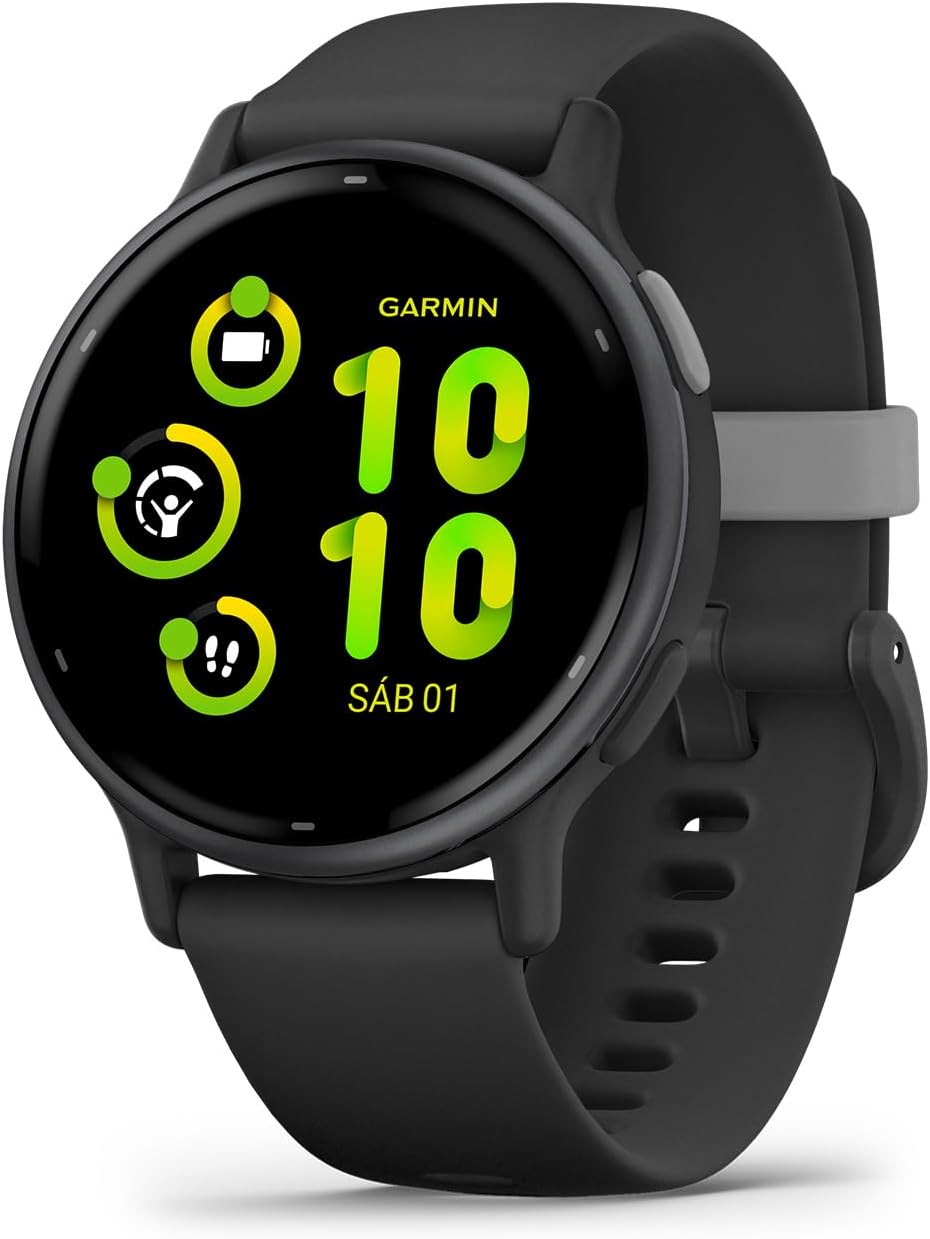

There’s that moment when you’re on the verge of getting serious about your workouts, your sleep, your stress levels… your life, really—and suddenly you realize: your current watch just isn’t cutting it. You want something smarter, sharper, and way more useful than just tracking steps or buzzing at notifications. And if you’ve been looking around, you’ve probably run into the Garmin Vivoactive 5 and the Garmin Venu 3.
At first, we thought, “These two? Practically twins.” But the more we wore them, dug into menus, stared at screens in the dark, and sweated through workouts, the more the differences jumped out. Yes, they both track your runs and check your heart rate—but only one of them feels like it truly knows you. Let’s break it all down and figure out where each of these watches stands.
Screens that tell more than just time
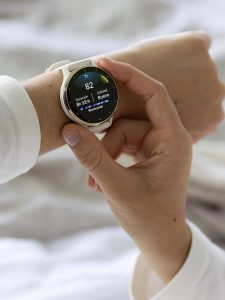
It hits you the second you turn on the screen. The Venu 3 comes with a 1.4-inch AMOLED display, pushing out 454 x 454 pixels, and it’s gorgeous. Bigger, crisper, and surprisingly easier on the eyes. We didn’t think a few millimeters would change much, but it does. You can read more at a glance, interact with data faster, and it just feels more modern.
The Vivoactive 5 still brings solid visuals to the table. Its 1.2-inch AMOLED display with 390 x 390 resolution is sharp enough, especially if you’re not zooming in on detailed widgets or reading notifications mid-run. But side-by-side? The Venu 3 clearly wins the screen game.
Now, design-wise, there’s a trade-off. The Venu 3 uses a stainless steel bezel, and yes, it feels a bit more premium. But that also means it weighs about 46 grams, which you do notice if you sleep with it on. Meanwhile, the Vivoactive 5 opts for anodized aluminum and comes in lighter at 36 grams, which honestly felt better during longer wear, especially overnight.
And when it comes to colors, the Vivoactive 5 has more fun options, so if matching your wristwear to your outfits is your thing, it gives you a bit more freedom.
Battery life that stretches the days (and nights)
We’re used to charging smartwatches like we charge our phones—too often. So it felt like a blessing when both models lasted well over a week. But let’s get specific.
The Venu 3 gives you up to 14 days in smartwatch mode, and 26 days if you switch to battery saver mode. That’s the kind of performance you notice when you’re traveling, or when your charger is nowhere to be found and your phone’s already dead.
The Vivoactive 5 isn’t far behind with 11 days in normal use and 21 in saver mode, but yes, those extra three to five days do make a difference. Especially when you start tracking sleep, workouts, and using notifications more aggressively.
Both are excellent on battery life—way above the average for AMOLED watches—but the Venu 3 squeezes out more without feeling like it’s compromising on anything.
Training features that go the distance
On paper, it’s a dead heat. Both watches come with over 30 preloaded sports modes, Garmin Coach, 5 ATM water resistance, and detailed workout tracking. Whether you’re swimming laps, lifting weights, or rolling through yoga flows, they’ve got you covered.
They both also include a wheelchair mode, which was something we didn’t expect but completely appreciated. It’s thoughtful, inclusive, and adds value that isn’t found on many competitors.
But if you’re a cyclist who uses more than just the basics, the Venu 3 has the upper hand. It supports power meters and advanced cycling sensors, whereas the Vivoactive 5 sticks to cadence and speed. So, if your rides are serious business, that small detail matters a lot.
For general fitness? They’re neck and neck. For technical athletes? The Venu 3 edges ahead.
Health tracking that doesn’t miss a beat—literally

Here’s where things start to lean more heavily in one direction. Both watches include pulse oximetry, heart rate tracking, stress monitoring, nap detection, and menstrual cycle tracking. So you’re getting deep insights into your body, no matter which one you choose.
But… the Venu 3 steps things up with an improved heart rate sensor that uses extra LEDs to improve both accuracy and responsiveness. We especially noticed it during interval workouts and at night during sleep tracking. It was just faster and more in tune with subtle shifts.
Another standout? Jet lag guidance. The Venu 3 gives you advice on how to shift your sleep based on your travel plans. It’s not gimmicky—it actually uses your schedule to suggest when to sleep, eat, or get light exposure. Perfect if you travel frequently and hate feeling groggy after landing.
So while the Vivoactive 5 covers the bases, the Venu 3 adds polish, nuance, and smarter tools for people who care about the details.
Sensors that change the game
This part surprised us. The Vivoactive 5 skips two very practical sensors: no gyroscope, and no altimeter.
That means it doesn’t track elevation changes. If you’re going on hikes, climbing stairs, or doing vertical intervals, it won’t capture that data. Meanwhile, the Venu 3 does, and does it well. Plus, the built-in gyroscope improves motion detection, so your indoor workouts and HIIT sessions get tracked more accurately.
And the hardware bonus doesn’t stop there. The Venu 3 includes a microphone and speaker, letting you take calls directly from your wrist or use your phone’s voice assistant hands-free. It’s not like carrying your phone, but in situations where your hands are full or your phone’s buried in a bag, it helps.
Also worth noting: the Venu 3 doubles the storage space with 8 GB versus the Vivoactive 5’s 4 GB. More room for music, more saved workouts, more freedom to go phone-free when running or training.
Connectivity without compromises
Both watches do a great job here. You get Bluetooth, WiFi, and ANT+ support, which means pairing with fitness gear, headphones, and your phone is seamless. No random disconnections, no pairing headaches.
Garmin Pay is on both too, which we ended up using more often than we expected. Quick coffee after a run? No need to bring your wallet.
And Garmin Connect keeps all your data in one place. Syncing is fast, smooth, and gives you access to deep analytics, no matter which watch you pick.
Interface, navigation, and software flow
Garmin’s software has come a long way, and both watches benefit from that. Menus are smooth, transitions are clean, and touch + button control makes navigation intuitive.
But once again, the hardware influences the experience. The Venu 3’s bigger screen makes every interaction feel easier. Bigger fonts, less squinting, smoother scrolling.
Plus, the haptic feedback on both watches is spot-on, giving a gentle buzz when you interact. But only on the Venu 3 can you talk back—thanks to that mic and speaker setup.
Even notifications hit differently on the Venu 3. You can reply to messages (on Android), take calls, and even hear calendar alerts out loud. The Vivoactive 5 shows the same notifications but stops there.
Everyday use: not just for athletes

These watches aren’t locked into workout mode. They’re daily companions. And we found ourselves leaning into that with the Venu 3 more than we expected.
Being able to handle calls, use voice assistants, and control music directly on the wrist made us pick up our phones less. And in a strange way, that reduced some of the digital noise. Fewer distractions, more control.
Sleep tracking also feels more insightful on the Venu 3, especially when viewing trends or sleep phases on the larger screen. And when you wake up to a vibration and see your sleep quality in sharp, colorful detail? It sticks.
That’s not to say the Vivoactive 5 can’t keep up. It’s still strong on daily performance, still super light, and still tracks all your core activities without issue. But when it came to everyday convenience, the Venu 3 spoiled us.
Materials and comfort on the wrist
Let’s talk feel. The Vivoactive 5 wins on comfort. Period. It’s lighter, thinner, and you’ll barely notice it on your wrist. If you wear your watch 24/7, including sleep and showers, that makes a difference.
The Venu 3 feels more substantial, especially with the stainless steel bezel. Not heavy exactly, but noticeable. If you’re used to minimalist trackers or lightweight watches, it takes some getting used to.
That said, both are rated 5 ATM for water resistance, so you can swim, shower, or get caught in the rain without a second thought. The screens hold up well, too—no scratches, no ghost touches, just solid performance.
Final verdict: Venu 3 doesn’t just win—it earns it
If you’re just looking at the surface, it’s easy to lump these two together. But once you start using them day in and day out, the Venu 3 shows up with features the Vivoactive 5 just can’t match.
From the sharper, larger AMOLED screen to the extra sensors, call support, improved health tracking, and more memory, the Venu 3 feels like a device that’s thinking one step ahead. It’s not just a fitness tracker with smart features. It’s a full-fledged smartwatch with depth.
Yes, the Vivoactive 5 is lighter, simpler, and easier on the wallet. But it cuts corners you’ll probably notice sooner than you think—especially if you care about detailed tracking or daily convenience.
So, is the Venu 3 perfect? No. But after testing both, we’d rather have the one that gives us more options, more insight, and more ways to stay connected—without needing a phone in hand.
And honestly, after answering a call mid-run or checking elevation gain after a hike without pulling out our phone? There’s no going back.