


If you’ve ever found yourself halfway up a mountain or a dozen miles into an ultra and thought, “Is my watch going to make it through this?”, then you already understand why this comparison matters. The Garmin Fenix 8 and the Amazfit T-Rex 3 aren’t just another pair of fitness-focused wearables. They’re survival tools. Performance meters. Digital companions for when conditions get messy.
But the similarities end pretty quickly once you scratch beneath the surface. The Fenix 8 plays in the major leagues, while the T-Rex 3 feels more like the gifted rookie trying to prove it belongs. Both deserve respect. But only one feels like the kind of watch you’d trust with your life when the trail disappears and the weather turns.
Let’s walk through where they clash—and where the fight gets interesting.
Materials that tell you everything
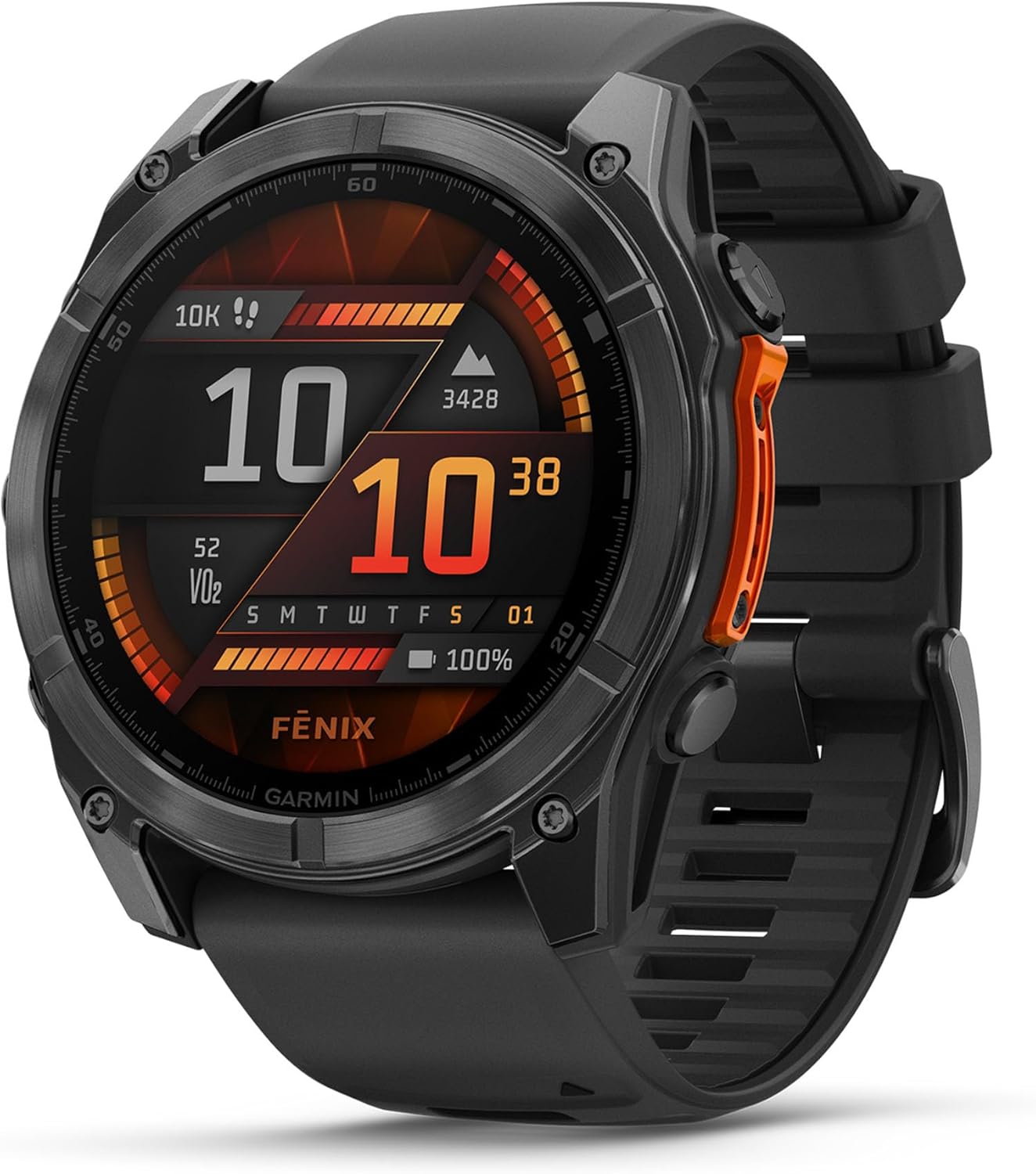
No surprises here. You pick up the Garmin Fenix 8, and you know it means business. Titanium bezel. Sapphire glass. Completely sealed inductive buttons. This thing isn’t trying to be flashy—it’s just ready. Every edge and surface feels engineered, not designed. It doesn’t beg for attention. It dares you to put it through something brutal.
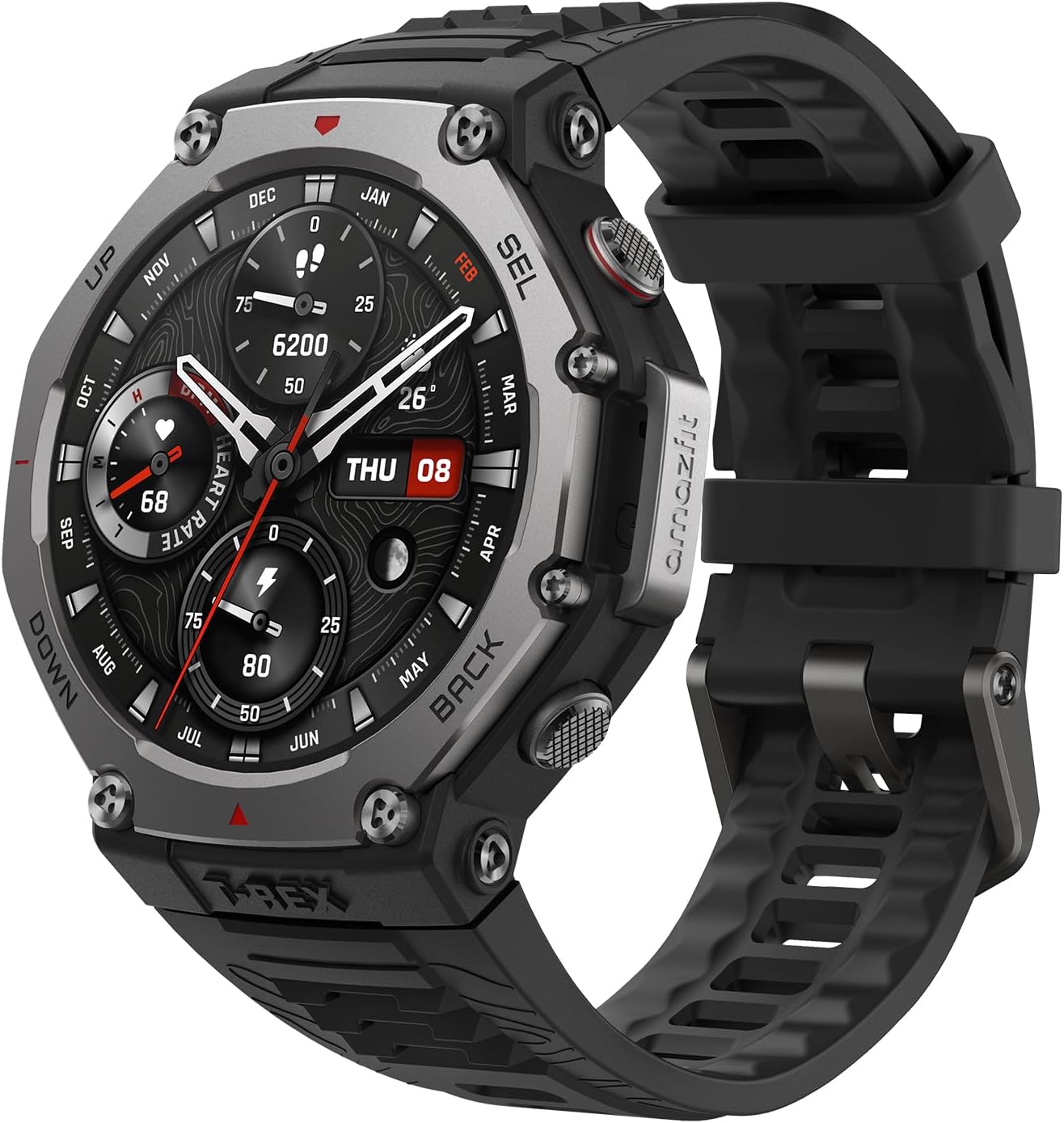
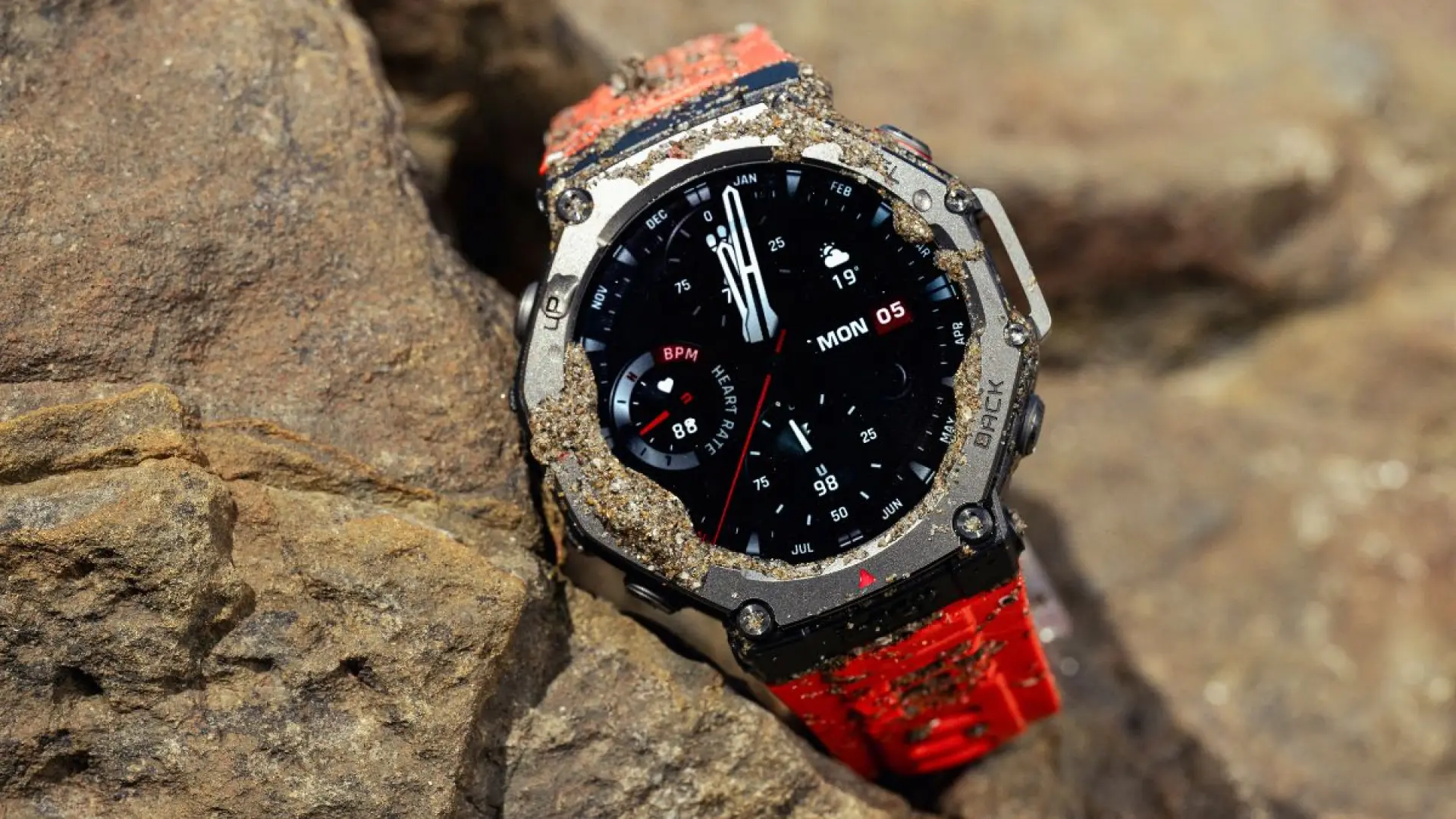
The Amazfit T-Rex 3, on the other hand, looks the part—and mostly holds its own. Stainless steel bezel, Gorilla Glass screen, tactile mechanical buttons that click with confidence. It feels sturdy. But side by side, you notice the difference in finesse. The Fenix 8 is like a bespoke off-road truck; the T-Rex 3 is more of a factory-built 4×4 with aftermarket tires.
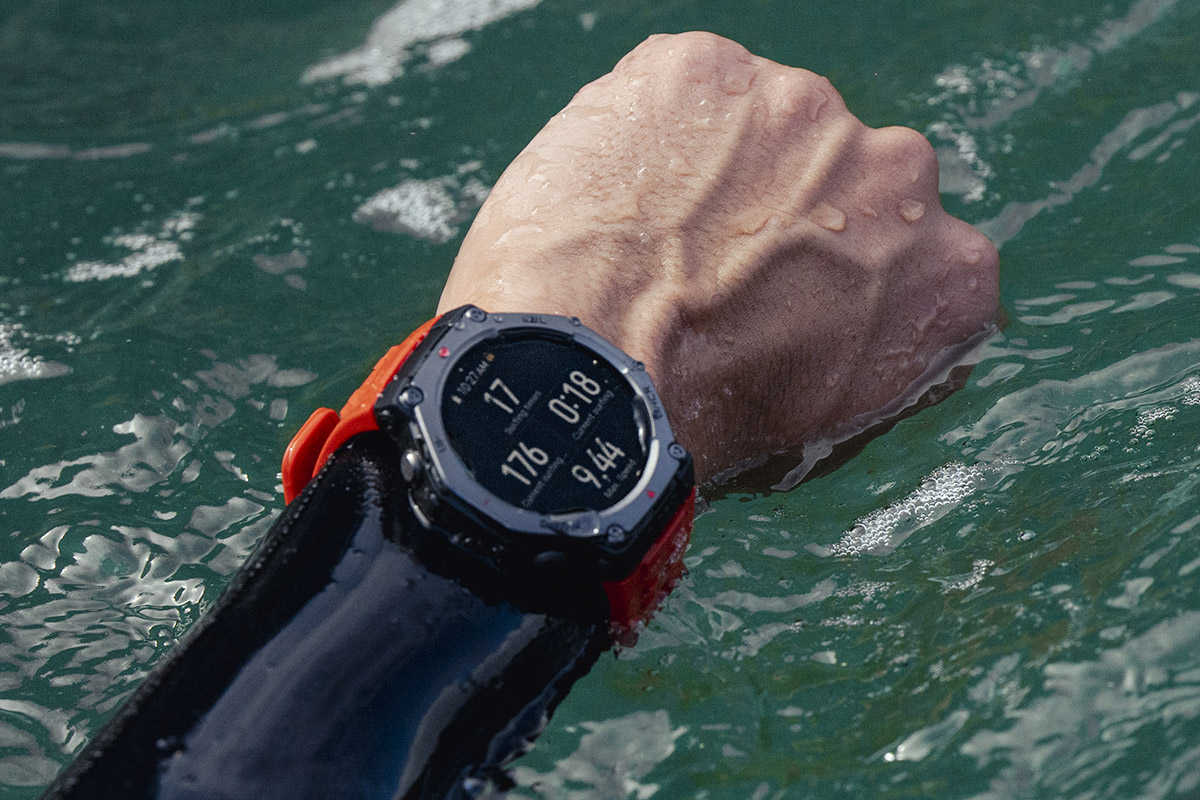
Waterproofing? Both deliver, but only the Fenix 8 supports diving-specific metrics—gas mix support, decompression data, the works. If your adventures dip below the surface, that might matter more than you think.
Displays that speak in different tones
Visually, the T-Rex 3 steals the show. A massive 1.5-inch AMOLED that hits 2,000 nits. It’s bright, colorful, sharp as hell, and easy to read under any light. It’s edge-to-edge beauty that feels like it belongs on a smartwatch twice the price.
The Fenix 8’s 1.4-inch AMOLED is more modest at 1,000 nits, but still plenty visible. And honestly? Garmin users aren’t usually in it for flashy screens. They want visibility, reliability, and battery efficiency. The always-on mode works cleanly, and the panel’s durability over time has a proven record. But yes, in side-by-side comparison, the T-Rex 3 looks like a step into the future.
Software: sleek vs strategic
Navigation is where the personalities start showing. The T-Rex 3 has a fast, clean UI, filled with animations, swipeable tiles, and quick-access widgets. It feels modern, mobile-inspired, and snappy.
The Fenix 8 is more utilitarian. “Widget glances” stack info like a mission brief, not a TikTok feed. You’re not here for razzle-dazzle. You’re here to get your data, fast. And the organization makes sense for serious users—each piece of info is where you need it, not where it looks best.
One looks cooler. The other is built for function.
Music handling: one’s a party, the other a cassette player
This is where things get stark. The T-Rex 3 supports MP3 transfers only. No Spotify. No streaming. You’re stuck managing files like it’s 2008.
The Fenix 8? It’s a full-fledged music hub. Sync your Spotify playlists. Download from Amazon Music or Deezer. Control streaming with Bluetooth headphones and enjoy a workout without your phone. For runners, cyclists, and gym rats who want their tunes without wires, this is a dealbreaker.
Voice and communication: one listens, the other talks
Microphones? Both have them. But only the Fenix 8 has a speaker, and that changes everything.
You can answer calls, get audible alerts, and interact with voice assistants like Google or Siri. The T-Rex 3 leans solely on Zepp Flow, which is decent, but not exactly Alexa-tier. And without a speaker, you’re stuck reading responses instead of hearing them.
This isn’t just about convenience—it’s about context. Driving? Gloved hands? Wet fingers? Voice matters more than you’d think.
Workout modes: quantity vs quality
Here’s a stat: the T-Rex 3 supports over 170 workout modes. Sounds impressive, right? Until you realize a lot of them are just variations of the same data templates.
The Fenix 8 cuts the list down but goes deeper. Trail run? You get vertical speed, altitude gain, terrain analysis. Golf? It loads full course maps with hazard layout. Skiing? It detects runs automatically and logs each descent. Diving? It goes way below what we’ve seen from wearables.
This is the difference between tracking and training. One says “you ran.” The other says “you hit 87% anaerobic load and need 36 hours to recover.”
Navigation: companion vs command center
This one’s not even close.
The T-Rex 3 gives you base maps and breadcrumb trails. They’re nice to look at. You can import GPX routes and follow them. That’s about it. No POI search, no on-watch route creation. You plan ahead or you’re out of luck.
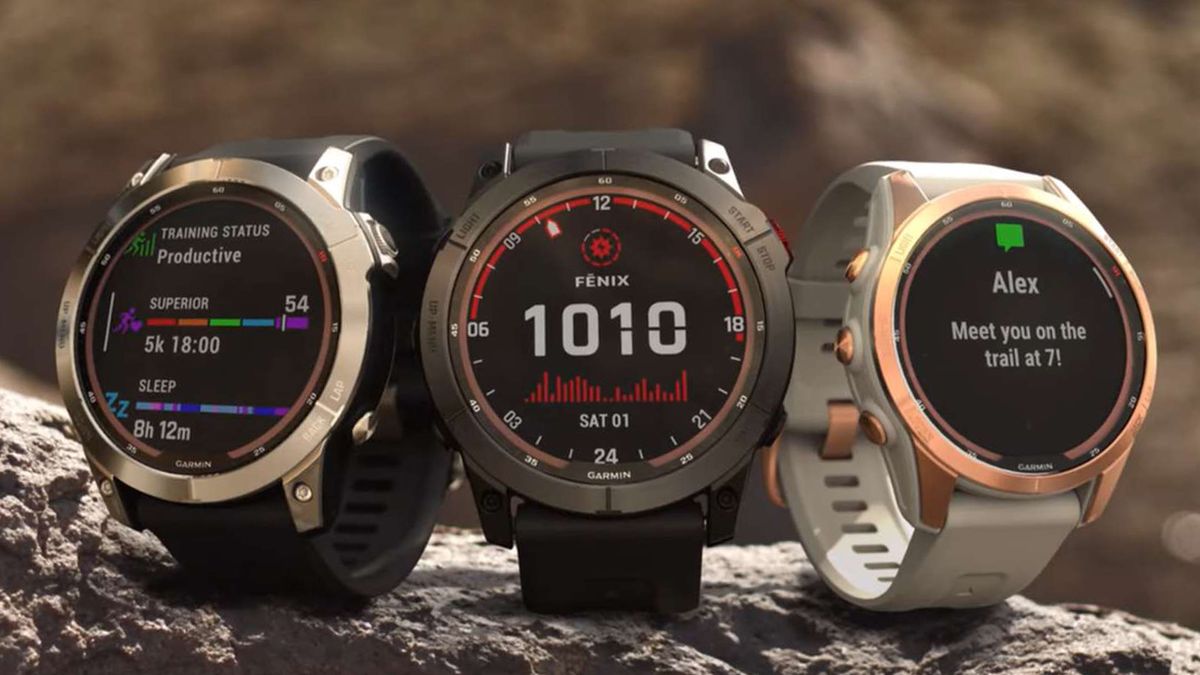
The Fenix 8? It’s a full-on GPS workstation. Download topographic maps, search for nearby summits or cafes, generate new routes on the fly, and get turn-by-turn directions. It works as a standalone navigator, even when your phone’s buried in your pack.
If you like to explore, this matters. It’s the difference between “I know where I’m going” and “Let’s see where this leads.”
Recovery and readiness: snapshot vs timeline
The T-Rex 3 has a solid Readiness Score. It pulls from HRV, sleep quality, and resting heart rate to give you a daily number. But that’s the thing—it’s once daily. And it trends positively, maybe a bit too generously.
The Fenix 8 uses Body Battery, a rolling metric that updates throughout the day. It reflects how much energy you’ve recovered, how much you’ve used, and how much you’ve got left. Pair that with sleep score, training status, and recovery time, and you get a full picture—not a snapshot.
One tells you how you slept. The other tells you when to push and when to pull back.
Sensor support: casual vs committed
Here’s where athletes lean in.
The Fenix 8 supports both ANT+ and Bluetooth, so it talks to literally everything—power meters, foot pods, smart trainers, cycling gear. The T-Rex 3 supports Bluetooth only. That’s fine for chest straps or basic accessories, but you’ll hit a wall if you’re working with pro-grade tools.
If you’ve got gear—or want to grow into it—Garmin’s flexibility becomes essential.
The ecosystems around them
This is maybe the most underappreciated piece.
Garmin Connect is a beast. It links up your bike computer, your scale, your running metrics, even your satellite communicator. It’s a platform. A central hub for your training and your life outdoors.
The Zepp app is improving, and Amazfit’s ecosystem includes earbuds, rings, and scales. But it still feels like individual products, not an integrated whole. If you’re already in the Garmin world, this isn’t even a contest.
Battery: two different strategies
T-Rex 3? Beastly battery. Up to 27 days in smartwatch mode if you’re okay with minimal heart tracking. Drop that interval to one-minute readings, and yes, the number dips. But it’s still massive. And up to 42 hours of GPS with heart rate is no joke.
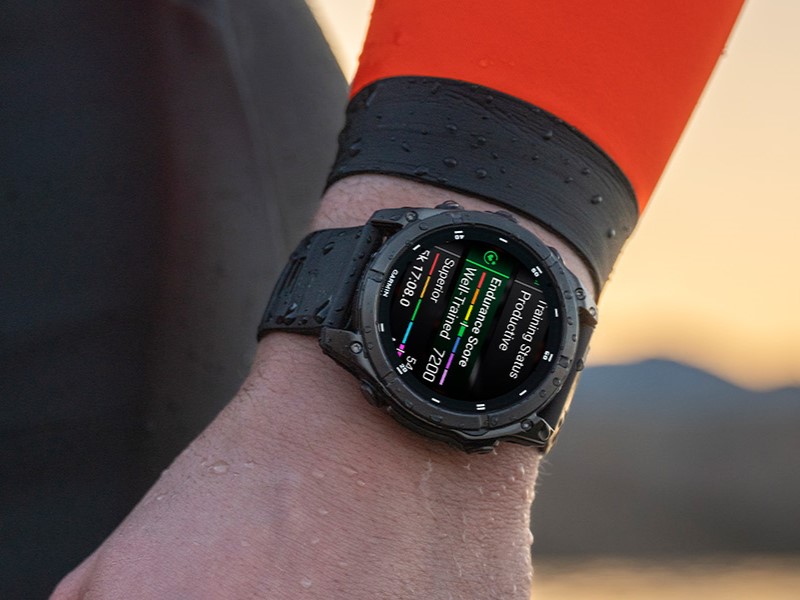
Fenix 8 offers 16 days in smartwatch mode, with full-time 1-second heart rate sampling. In GPS mode, depending on mapping and settings, it’s closer to 36–42 hours. It’s consistent, transparent, and accurate.
Amazfit gives you longevity. Garmin gives you depth.
App support and updates
Garmin’s Connect IQ store has serious weight. Apps, data fields, watch faces, third-party service integrations—it’s a playground for people who tinker. And Garmin supports its watches for years. Some Fenix users are still getting updates on models from four years ago.
Amazfit has made real strides with firmware consistency, but its update history is shorter and a bit more unpredictable.
Final punch: which one’s right for you?
We’ll say this: the Amazfit T-Rex 3 is incredible value. If you want long battery life, a killer display, and good-enough tracking for general fitness, it punches way above its price. It’s ideal for recreational hikers, casual athletes, or folks who want rugged without the price tag.
But if you’re training, competing, exploring, or depending on your watch to give you an edge—or a lifeline—the Garmin Fenix 8 is where the line gets drawn.
It’s not just a watch. It’s a system. A mindset. A tool that adapts and grows with you. And that, more than titanium or maps or metrics, is what sets it apart.
Because sometimes, when everything else gets stripped away, you don’t want a watch that looks the part. You want one that is the part.